AI Industry Outlook: Investment, Regulation, and Growth
AI Industry Outlook: Investment, Regulation, and Growth
The artificial intelligence industry is entering a more demanding phase. Early enthusiasm focused on model launches, venture funding, and rapid experimentation. The next stage will depend on whether companies can turn technical progress into durable revenue, measurable productivity, public trust, and regulatory stability.
AI now requires enormous investment in data centers, specialized chips, energy infrastructure, research talent, and software deployment. Companies also face geopolitical competition, political lobbying, workforce disruption, and pressure to cooperate with schools and employers.
The central tension is clear: AI companies continue to attract extraordinary capital, while concerns about inflated valuations, unsustainable spending, market corrections, and public resistance are growing. Some parts of the sector may experience speculative excess, while others create lasting economic value.
Why AI Investment Remains Strong
Potential IPOs Could Test Investor Confidence
Anthropic has reportedly filed for a potential stock-market listing that could value the company at up to $1.5 trillion, according to reporting cited by The Guardian Source 1. This is a reported potential valuation, not a confirmed market capitalization or completed offering.
An Anthropic IPO could establish a public-market benchmark for frontier AI businesses. Investors would assess revenue growth, customer concentration, computing costs, gross margins, supplier dependence, contract renewals, cash consumption, capital expenditure, regulation, and intellectual-property exposure.
A successful offering could encourage similar listings. A weak reception could pressure private valuations and force companies to provide clearer evidence of sustainable economics. Filing status, timing, valuation, and financial details should be verified through authoritative filings before publication or investment decisions.
Nscale is also reportedly pursuing a potential $30 billion IPO while its chief executive navigates uncertainty in the AI market Source 10. The report illustrates the scrutiny that public markets can apply to leadership, governance, customer concentration, infrastructure commitments, and profitability expectations.
Wall Street Is Financing an Expensive Expansion
The AI investment cycle requires more than software funding. Companies need data centers, advanced processors, networking equipment, electricity, cooling systems, research teams, and distribution infrastructure. Reuters has examined whether Wall Street will continue supporting AI companies as their financing needs grow Source 9.
Long-term returns will depend on recurring revenue, stronger margins, customer retention, and measurable productivity gains. User numbers and media attention are weak substitutes for revenue quality. Investors will increasingly compare projected demand with paid usage, renewal rates, customer expansion, and savings or additional revenue generated by deployment.
Is the AI Industry Facing a Bubble?
An AI bubble occurs when valuations and investment expectations rise faster than underlying business performance. Warning signs include:
- Extremely high private-company valuations
- Large funding rounds without clear profitability
- Dependence on assumed future demand
- Infrastructure spending based on aggressive adoption forecasts
- Heavy investment concentration in a small number of companies
- Limited visibility into computing costs and customer economics
Strong investment does not prove a bubble. Strategic spending may reflect genuine demand, competitive pressure, or the need to control critical infrastructure. The key distinction is between technological capability and financial pricing. A company can develop valuable technology while investors overpay for its shares or private valuation.
China’s AI Market May Be Experiencing a Correction
Futurism has argued that China’s AI market may be experiencing a sharp downturn or correction Source 2. This interpretation does not confirm that China’s entire AI sector has collapsed.
Possible causes include excessive investment, slower commercialization, regulatory uncertainty, intense competition, weaker investor appetite, and broader economic pressure. If funding declines, weaker companies may fail while more efficient firms gain access to talent, customers, and infrastructure at lower cost.
A correction would not necessarily end AI growth. Enterprise software, public-sector systems, education tools, robotics, manufacturing automation, and logistics applications may continue expanding even as speculative financing declines. The strongest applications will solve specific operational problems, integrate with existing workflows, and produce measurable results.
Macroeconomic Risks of an AI Investment Reversal
Politico has examined the Federal Reserve’s potential challenges if the AI investment boom reverses into a bust Source 4.
Potential transmission channels include:
- Falling technology valuations
- Reduced corporate investment
- Losses for institutional investors
- Weaker hiring and wage growth
- Lower demand for data centers and hardware
- Pressure on lenders and private-market funds
- Delays to construction and energy projects
An AI investment decline could affect semiconductor manufacturers, cloud providers, networking companies, construction firms, energy suppliers, venture-capital funds, and pension portfolios. Systemic risk would depend on leverage, banking exposure, private-credit commitments, and the concentration of losses.
A gradual repricing would be easier to manage than a sudden collapse. Companies would have more time to reduce spending, renegotiate infrastructure contracts, and redirect capital toward profitable uses.
Investors should monitor revenue growth, gross margins, free cash flow, compute costs per customer, data-center utilization, enterprise renewal rates, capital-expenditure growth, and IPO pricing. Revenue quality matters more than user counts.
China’s AI Industry: Risk and Opportunity
Declining investment or valuations do not necessarily indicate declining technical capability. A market downturn can coexist with strong research institutions, government support, industrial deployment, domestic demand, and advances in robotics.
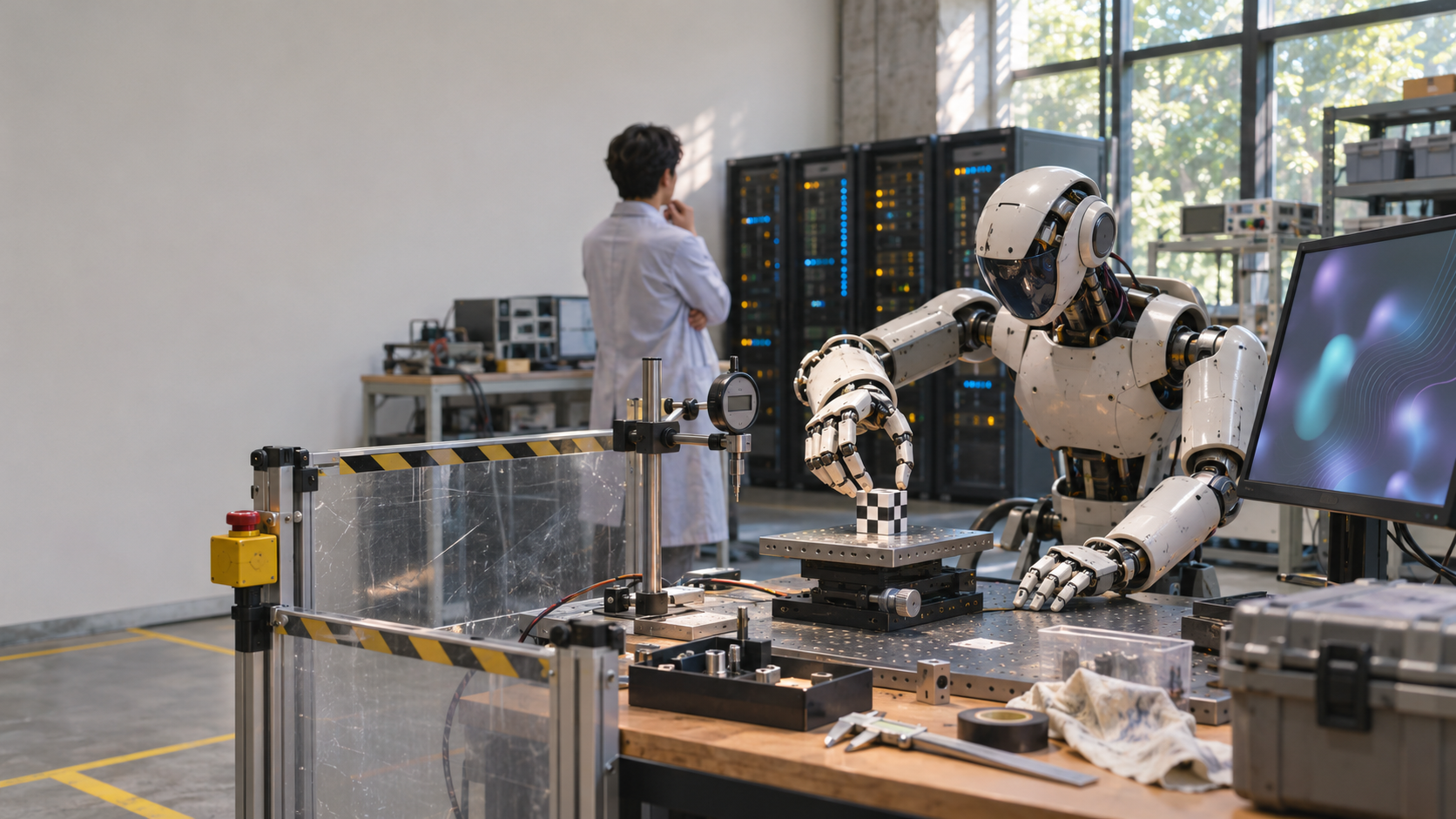
Embodied AI integrates artificial intelligence into physical systems such as robots, autonomous machines, industrial equipment, smart vehicles, and warehouse systems. China Daily Global Edition has reported that this emerging sector is creating employment opportunities Source 5.
Potential roles include robotics engineers, hardware technicians, machine-learning specialists, safety professionals, field-service workers, human-machine interaction designers, manufacturing operators, and systems integration specialists.
Automation may eliminate repetitive tasks while creating roles in installation, supervision, maintenance, training, and safety. Vocational schools, universities, employers, and public agencies can support this transition through updated curricula, apprenticeships, laboratories, internships, and employer partnerships.
AI and Education
An article summarized in the provided sources urges Chinese-language education to adopt AI and strengthen relationships with industry Source 3.
Potential applications include writing support, personalized learning, translation, language practice, automated feedback, curriculum development, and digital teaching assistants. AI should support educators rather than replace instructional judgment. Teachers remain responsible for context, assessment, student welfare, and the interpretation of sensitive work.
Industry partnerships can provide updated curricula, internships, access to current tools, workplace insight, technical training, and relevant research projects. Schools must also address vendor dependence, student-data privacy, unequal access, poorly tested software, and commercial bias. Contracts should define data ownership, security standards, audit rights, and exit options.
Students should learn to fact-check AI outputs, identify bias, protect personal information, cite sources, recognize fabricated content, evaluate system limitations, and distinguish generated text from verified evidence.
Politics and Public Trust
The Intercept has reported on efforts by the AI industry to influence U.S. midterm elections and the backlash against AI lobbying Source 6.
Companies engage in political activity to shape AI regulation, energy policy, liability rules, immigration, public funding, and competition enforcement. Lobbying may secure favorable policies, but it can also increase opposition when industry priorities appear disconnected from concerns about job displacement, surveillance, copyright, misinformation, and energy use.
Bloomberg has reported that the AI industry’s political alignment with Donald Trump could become a liability as the political environment changes Source 7, while a related report examines the same risk Source 8.
Companies that align too closely with one political agenda may face regulatory and reputational risk when government leadership or public sentiment changes. Durable businesses need strategies that survive political transitions.
Public trust affects adoption, regulation, recruitment, customer retention, and brand value. Companies can strengthen trust through transparent communication, measurable safety practices, independent testing, clear data policies, and engagement with affected communities.
What Comes Next
Capital will shift toward companies with paying enterprise customers, defensible technology, efficient infrastructure, strong governance, and clear regulatory strategies. Model performance alone may no longer justify premium valuations.
AI adoption will become more sector-specific, with continued opportunities in education, manufacturing, healthcare administration, logistics, customer service, software development, robotics, energy management, and public-sector operations. Successful deployment will depend on workflow integration, security, reliability, and measurable results.
Companies will increasingly need to prove productivity improvements, safe deployment, data protection, economic sustainability, workforce benefits, and regulatory compliance. The next phase will be shaped by execution rather than ambition alone.
Conclusion
AI investment remains powerful but increasingly expensive. Potential IPOs could test public-market confidence in frontier AI companies, while a correction in parts of China’s market could expose weak business models without ending technological progress.
A major investment reversal could affect technology suppliers, infrastructure projects, workers, investors, and monetary policy. Political lobbying and partisan alignment could also damage public trust when corporate priorities appear disconnected from social concerns.
The AI industry is unlikely to disappear if valuations fall. The strongest companies and applications will deliver durable economic and social value. Sustainable financing, practical deployment, workforce preparation, responsible governance, and public legitimacy will determine the industry’s next phase.
FAQ
Is the AI industry in a bubble?
Some parts of the market may show bubble-like characteristics, including high valuations, aggressive investment, and expectations of rapid future demand. This does not mean every AI company or application is overvalued. A correction could reduce valuations while enterprise AI, robotics, education, and automation continue growing.
What would an Anthropic IPO mean?
A successful IPO could validate investor demand for major AI companies and establish a public-market benchmark for frontier AI valuations. A weak reception could pressure private valuations and force companies to focus on revenue, costs, margins, and profitability. Reported filing and valuation details require confirmation through authoritative filings Source 1.
Could weaker AI investment damage the wider economy?
A sharp reversal could affect technology companies, semiconductor suppliers, investors, hiring, data centers, construction, and energy projects. The severity would depend on leverage, financial exposure, and the speed of the decline Source 4.
Is China’s AI market shrinking?
The provided source describes a possible downturn or correction, not a confirmed collapse of China’s entire AI market Source 2. Investment weakness can coexist with strong research, industrial adoption, government support, and embodied AI development.
Will AI create more jobs than it eliminates?
The outcome will vary by industry and task. AI may reduce repetitive work while creating roles in robotics, engineering, implementation, oversight, training, maintenance, and safety. Reskilling and education-industry collaboration will determine whether workers can access these opportunities Source 5.
Why does politics matter to AI?
Political decisions influence regulation, energy access, immigration, public funding, data governance, and competition policy. Excessive or partisan lobbying may reduce public trust and create opposition Source 6.
Artikel Terkait
-
 Artificial Intelligence Industry: Growth, Investment, and Regulation
-
 Large Language Models: Accuracy, Robotics, and Limits
-
 AI Agents: Benefits, Risks, Use Cases, and Governance
-
 Large Language Models: Reasoning, Adaptation, and Decisions
-
 AI Agents: Capabilities, Risks, and Real-World Limits
-
 AI Industry Outlook: Politics, Regulation, and Bubble Risk