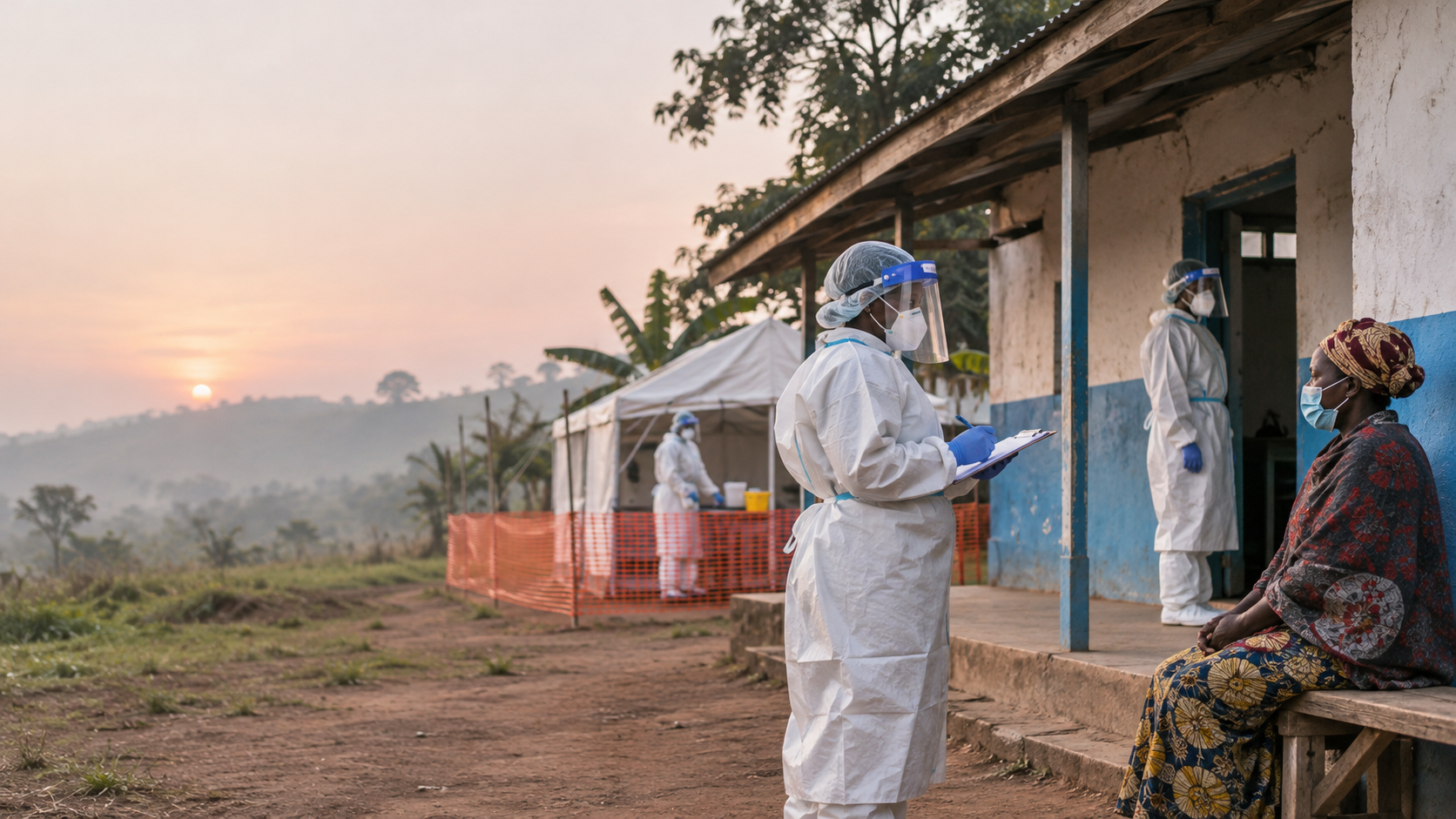
Could the US Lose Measles Elimination Status?
Could the US Lose Measles Elimination Status?
The United States could lose its measles-elimination status if health experts determine that ongoing transmission no longer meets the criteria for elimination. The designation has not been confirmed as withdrawn. Experts are reviewing whether transmission has continued for long enough and across a wide enough area to represent a return of endemic spread. Source 1
A loss of status would reverse a major American public-health achievement built on vaccination, disease surveillance, laboratory testing and rapid outbreak response. It would also create political pressure for the federal health system under Robert F. Kennedy Jr.’s leadership.
The available evidence does not establish that one official personally caused a particular outbreak. The more relevant questions concern vaccination coverage, surveillance capacity, federal messaging and the decisions made during the current response.
What Measles Elimination Means
Elimination Is Not Eradication
Measles elimination means that a country has interrupted continuous, endemic transmission within its borders. It does not mean that cases can never enter the country.
A traveler can become infected abroad and bring measles to the United States. If health authorities detect the case quickly and most contacts are immune, transmission can end without affecting the country’s elimination status.
Eradication would require the complete worldwide removal of the measles virus. No country can achieve eradication alone while the virus continues to circulate elsewhere.
- Elimination: Sustained domestic transmission has been interrupted in a defined geographic area.
- Eradication: Transmission has ended worldwide.
How a Country Can Lose Its Status
An imported infection becomes more concerning when it produces a sustained chain of domestic transmission. Health authorities examine how cases are connected, how long transmission continues and whether infections can still be traced to an outside source.
The review is expected to consider:
- Transmission patterns.
- Outbreak duration.
- Links between cases.
- Evidence of continuing domestic spread.
- The ability of health departments to detect and contain infections.
A review does not mean that elimination status has already been withdrawn. Reuters reported that experts were meeting to assess whether current measles activity justified removing the designation. Source 1
Why the United States Is Under Review
Rising Cases Threaten Transmission Control
Scientific American reported that measles cases and outbreaks are threatening the interruption of transmission in the United States. Source 5
Measles spreads rapidly. An infected person can expose others before the illness is recognized, allowing transmission in homes, schools, childcare centers, healthcare facilities and public gatherings.
The risk increases where vaccination coverage is uneven. A national average can conceal communities with much lower immunity. In those areas, one imported case can become a prolonged outbreak rather than a short, contained event.
Delayed testing or reporting creates additional opportunities for spread. Infected people may travel, attend school or work, and expose others before public-health officials identify them.
Experts Are Assessing Whether Transmission Remains Ongoing
The review focuses on the difference between imported cases and sustained domestic transmission. Repeated introductions do not necessarily end elimination status if each outbreak is stopped.
The concern arises when transmission continues beyond the period used to assess elimination. Investigators must determine whether cases form linked chains, whether those chains remain active and whether infections can still be explained by importations.
This requires more than counting cases. Officials must reconstruct how the virus moved through communities and determine whether public-health systems contained each outbreak. Until experts issue a decision, the possible loss of status should not be described as confirmed. Source 1
The Role of Vaccination Coverage
Measles control depends on high immunity across communities, not only on a strong national average. The measles, mumps and rubella vaccine remains central to preventing infection and limiting transmission.
Coverage can vary within a city, county or school district. National figures may therefore fail to show where the greatest vulnerabilities exist. An outbreak can begin in a community with low coverage and spread through travel and contact networks to other states.
Vaccination gaps can result from:
- Barriers to healthcare access.
- Missed appointments.
- Administrative difficulties.
- Medical or nonmedical exemptions.
- Distrust of institutions.
- Disrupted healthcare services.
- Conflicting information.
Effective policy must distinguish between vaccine confidence and vaccine access. Some families need clear, trusted information. Others need affordable appointments, transportation, flexible clinic hours or help obtaining records.
Clear communication also matters during an outbreak. Families need guidance about vaccination, symptoms and possible exposure. Clinicians and schools need consistent instructions about testing, reporting and exclusion policies.
RFK Jr.’s Leadership and the Political Stakes
The review is taking place while RFK Jr. leads the federal health system. That timing makes it a test of federal leadership, although state and local agencies perform much of the frontline measles-control work.
The Daily Beast framed a possible international ruling as damaging for Kennedy in the context of the measles crisis. Source 9
Key accountability questions include:
- Is federal guidance clear and consistent?
- Are vaccination programs adequately supported?
- Do local health departments have sufficient resources?
- Is surveillance data collected and shared quickly?
- Are federal agencies coordinating effectively with states?
- Does the United States communicate reliably with international partners?
These questions do not prove personal causation. The technical finding will depend on transmission evidence. The political debate will concern whether federal decisions helped prevent the loss of elimination status or allowed vulnerabilities to worsen.
What Would Happen If Status Were Lost?
CNN reported that the CDC chief said the agency would not alter its measles response if the United States lost elimination status. Source 3
That position reflects a basic reality: the virus requires the same response regardless of its classification. Agencies would still need to:
- Detect and report cases.
- Identify potentially exposed people.
- Investigate links between infections.
- Provide vaccination according to medical guidance.
- Monitor outbreaks and transmission chains.
- Share information with clinicians, schools and communities.
The designation measures transmission; it does not determine how individual cases are treated or whether an outbreak requires immediate action.
The practical response might remain largely unchanged, but the symbolic and international effects could be significant. Losing status could reduce confidence in American disease-control capacity and increase scrutiny from health partners. No automatic travel restrictions or international penalties should be claimed without verified evidence.
Losing status would not mean that measles was spreading everywhere or that control was impossible. It would indicate that sustained endemic transmission may have returned under the review criteria. The status could potentially be restored after transmission is interrupted, vaccination coverage improves and surveillance systems demonstrate that endemic spread has ended.
What Officials Should Do Next
Officials should explain which criteria were applied, what evidence experts considered, how long transmission continued, where linked cases occurred and whether infections were connected to importations. Transparency can reduce speculation and strengthen public trust.
Authorities should identify undervaccinated areas and expand access through primary-care practices, pharmacies and community clinics where authorized. They should reduce administrative barriers and provide clear, evidence-based information.
The response also requires timely case reporting, adequate health-department staffing, laboratory testing, contact tracing, cross-state coordination, clear guidance for clinicians and schools, and reliable data sharing. Federal support must reach local systems quickly enough to matter during an outbreak.
Conclusion
The United States has not been confirmed to have lost measles-elimination status. Experts are reviewing whether ongoing transmission meets the criteria for withdrawing the designation.
If status is lost, the change would represent a major reversal in American public health and raise questions about vaccination coverage, surveillance, local capacity and federal leadership under RFK Jr. The CDC has indicated that outbreak investigations, testing, vaccination and surveillance would continue.
Elimination requires more than reaching a milestone. It requires sustained vaccination coverage, rapid detection, strong local health departments and credible public communication. The current review will test whether those systems can be strengthened before a serious setback becomes permanent.
Frequently Asked Questions
Has the United States already lost measles-elimination status?
Not according to the supplied reporting. The reports describe an expert review and a possible loss of status. The designation should not be described as withdrawn unless an official decision confirms it.
Would the CDC stop responding to measles outbreaks?
No. CNN reported that the CDC chief said the agency would not alter its measles response if the designation changed. Surveillance, case investigation, testing, vaccination and outbreak-control work would continue. Source 3
Why is RFK Jr.’s leadership part of the controversy?
The review is taking place while RFK Jr. leads the federal health system. That makes federal messaging, vaccination policy, surveillance support and outbreak coordination subjects of political scrutiny. The available reporting does not prove that he personally caused the current transmission.
Can the United States regain measles-elimination status?
Potentially. Restoration would require ending sustained transmission, maintaining high vaccination coverage and demonstrating effective surveillance and control over time. The process would be difficult but not necessarily permanent once lost.
Does losing elimination status mean measles is spreading everywhere?
No. The designation concerns sustained transmission at the national level. Outbreaks can remain geographically concentrated while creating a serious national public-health concern.