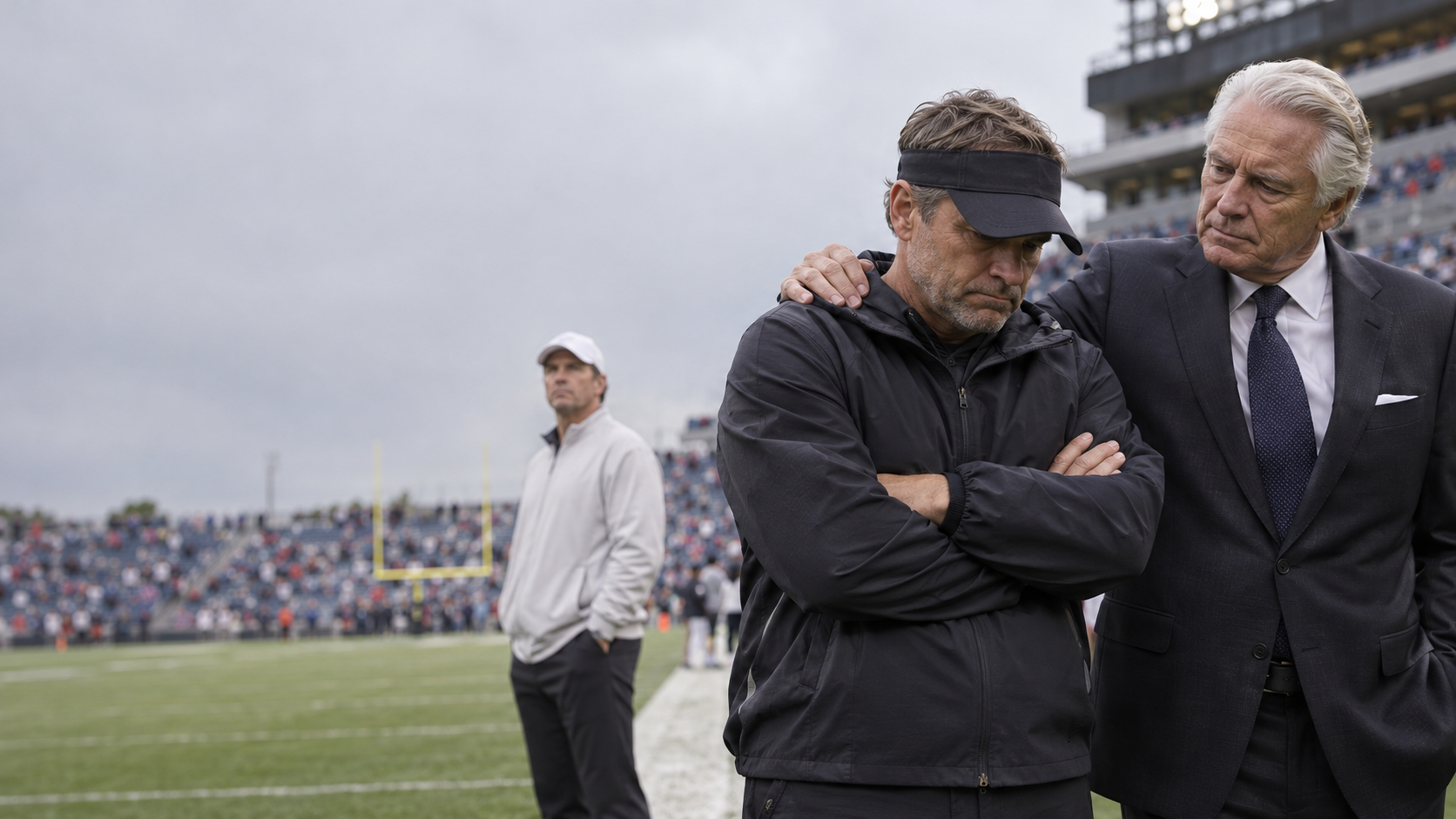
Dak Prescott Calls Blaming Schottenheimer “Cowardice”
Dak Prescott Calls Blaming Brian Schottenheimer “Cowardice”
Dak Prescott rejected the idea that Brian Schottenheimer should receive sole blame for the Dallas Cowboys’ latest defeat, calling that approach “cowardice.” His comments followed another disappointing Cowboys performance and intensified the debate over accountability in Dallas.
Schottenheimer remains under pressure as the offense continues to struggle. Critics have questioned the team’s preparation, offensive direction and ability to adjust during games. Others argue that the problems extend beyond one coordinator and reflect broader decisions made by the Jones family organization.
Prescott’s position creates an important distinction: defending Schottenheimer against scapegoating does not prove that every coaching decision was correct. Dallas still faces legitimate questions about execution, accountability and the organizational choices shaping the team.
What Dak Prescott Said About Brian Schottenheimer
Prescott Rejected Sole Blame
Prescott’s reported use of the word “cowardice” represented a forceful rejection of the idea that Schottenheimer should absorb all responsibility for Sunday’s loss. His comments emphasized shared accountability among coaches, players and the broader organization. Source 3
That does not mean Prescott claimed Schottenheimer made no mistakes. His reported argument was that reducing a complex loss to one coach would be unfair and incomplete.
The wording drew attention because “cowardice” is stronger than a routine defense of a coach. It suggested that Prescott viewed attempts to isolate Schottenheimer as an avoidance of the team’s broader responsibilities.
As the Cowboys’ starting quarterback, Prescott’s public comments carry considerable weight. He leads the offense, works closely with the coaching staff and represents the team during postgame discussions.
The Comments Followed Another Difficult Performance
The comments came after another disappointing Dallas result. Yahoo Sports described Prescott as struggling to explain the Cowboys’ latest embarrassing performance, underscoring the difficulty he faced when asked to account for the team’s failure. Source 1
Postgame questions usually focus on execution, preparation and decision-making. When a team suffers another damaging loss, explanations become nearly as important as the result. Supporters want to know whether players and coaches understand what went wrong and have a plan to correct it.
Prescott offered certainty on one point: Schottenheimer should not be blamed alone. That certainty contrasted with the broader uncertainty surrounding the performance.
His comments may reflect several motivations. He could have been accepting responsibility for his own role, protecting the locker room from a public blame cycle or arguing that Dallas’ recurring issues involve personnel, execution and organizational decisions as much as offensive strategy.
Why Brian Schottenheimer Is Facing Criticism
Dallas Keeps Finding Ways to Lose
Schottenheimer has become a central target because the Cowboys continue to produce disappointing results. Sportsnet.ca described mounting criticism of Schottenheimer as Dallas keeps finding ways to lose games. Source 7
One poor performance can be dismissed as an isolated breakdown. A pattern raises larger questions about preparation, offensive identity and the team’s ability to respond when an opponent disrupts the initial plan.
The available coverage does not provide a complete play-by-play account of Sunday’s loss. It does establish the broader concern: Dallas has again produced a result that increased pressure on the coaching staff.
Critics Question the Offensive Direction
Critics are likely to ask whether the offense creates enough consistent opportunities, adjusts effectively when the initial plan fails and uses Prescott in ways that maximize his strengths. They will also question whether the players are prepared to execute the system and whether the team has a clear identity in critical situations.
Those questions remain fair even if Prescott is correct that Schottenheimer should not receive all the blame. Accountability does not require assigning one person total responsibility. It requires identifying the decisions and actions that contributed to the result.
That evaluation should focus on play design, communication, preparation and adjustments rather than personal attacks.
The Pressure Is Bigger Than One Game
A single loss rarely determines a coach’s future, but repeated losses can turn a performance review into a job-security discussion. Each additional setback makes it harder for Dallas to argue that its problems are temporary.
If the offense improves, Prescott’s defense of Schottenheimer may appear more credible. If the same problems continue, critics will argue that public support has delayed necessary action.
Why Prescott’s Comments Divided Cowboys Fans
Some Fans Say Prescott Is “Taking Bullets”
Some Cowboys fans criticized Prescott for defending Schottenheimer after Dallas’ overtime loss to the Arizona Cardinals. Their message was that Prescott should stop “taking bullets” for the coach. Source 9
This view holds that Prescott is absorbing pressure that should reach the coaching staff. Fans want clearer acknowledgment that coaching decisions contributed to the defeat, even if they do not expect Prescott to attack Schottenheimer personally.
Another disappointing result can make even a measured defense sound like resistance to accountability.
Others See Leadership
The opposing interpretation presents Prescott’s response as leadership. A quarterback who publicly abandons his coach after a loss can create instability inside the locker room. Prescott may have wanted players and coaches to confront the problem together rather than begin an immediate blame cycle.
Leadership and accountability are not opposites. Prescott can defend Schottenheimer while acknowledging that the offense must improve. Schottenheimer can accept scrutiny without becoming the sole explanation for the loss.
The strongest evidence for Prescott’s position will not come from another postgame statement. It will come from better performance.
Is Schottenheimer the Main Problem?
The Case for Accountability
Offensive coordinators influence game planning, play design, communication and adjustments. When an offense repeatedly struggles, the coordinator must face serious evaluation.
That review should consider:
- Offensive structure and play design.
- Situational decisions.
- Communication between coaches and players.
- Second-half adjustments.
- Execution in late-game situations.
- The consistency of the offensive identity.
These questions do not require blaming Schottenheimer for everything. They require determining whether he is meeting the responsibilities attached to his role.
The Case Against Blaming Him Alone
Football outcomes involve multiple layers of responsibility. Players must execute, the quarterback must make decisions, the offensive line must perform, and injuries can change a team’s capabilities. The roster must also fit the system.
Responsibility extends to the head coach, front office and ownership. The people who construct the roster and establish the leadership structure influence the conditions under which coordinators work.
A fair evaluation should consider player execution, quarterback decisions, offensive line performance, injuries, roster construction, head-coaching oversight, front-office decisions and ownership.
The available reporting does not provide enough detail to assign a precise share of blame to any individual. It supports a broader conclusion: Schottenheimer can be accountable without being solely responsible.
The Jones Family Organization Enters the Debate
A Dallas News analysis argued that the latest Cowboys collapse should not be blamed solely on Schottenheimer but on the broader Jones family organization. Source 5
That argument broadens the analysis from play-calling to ownership and management. The organization influences coaching hires, personnel decisions, team-building philosophy, public messaging and the standards used to evaluate failure.
A coordinator change could matter if the offense lacks direction or fails to adjust. However, a new coach may inherit the same roster weaknesses, leadership structure and operational constraints. Changing Schottenheimer without examining those conditions could create a short-term narrative of action without solving the deeper problem.
The broader explanation includes several layers:
- Coaches design and communicate the plan.
- Players execute it.
- Quarterbacks make decisions within it.
- Executives construct the roster.
- Ownership establishes the organization’s direction.
That does not eliminate accountability. It makes accountability more accurate.
What Happens Next?
Schottenheimer will remain under pressure if the offense continues to struggle. The next evaluation will focus on offensive efficiency, consistency, responses to defensive adjustments and execution in high-leverage situations.
Prescott must also balance public support with personal accountability. He must defend teammates and coaches without appearing to dismiss the offense’s failures, while accepting responsibility for his own performance.
The Cowboys need a shared diagnosis among Prescott, Schottenheimer, the head coach, players, front-office leadership and ownership. They must determine whether the central problem is coaching, execution, roster construction, organizational leadership or a combination of those factors.
Conclusion
Dak Prescott called it “cowardice” to blame Brian Schottenheimer alone for Sunday’s loss. Supporters see that as leadership and shared accountability. Critics see Prescott protecting a coach whose offense remains under pressure. Broader analysis places responsibility on the Jones family organization.
All three interpretations can contain part of the truth. Schottenheimer may deserve criticism without being solely responsible. Prescott can defend him without claiming that the offense has no problems. Ownership and management can face scrutiny without becoming the only explanation for every defeat.
The key distinction is between refusing unfair blame and avoiding legitimate accountability. Prescott rejected scapegoating. Now the Cowboys must identify the specific causes of their repeated failures and make measurable corrections.
Frequently Asked Questions
Why did Dak Prescott call it “cowardice” to blame Brian Schottenheimer?
Prescott used “cowardice” to reject the idea that Schottenheimer should receive all the blame for Dallas’ loss. His reported comments emphasized shared responsibility among coaches, players and the broader organization. Source 3
What criticism is Brian Schottenheimer facing?
Schottenheimer is facing criticism over the Cowboys’ recurring offensive struggles and repeated losses. Critics are questioning the team’s preparation, game planning, adjustments and overall offensive direction. Source 7
Did Prescott say Schottenheimer made no mistakes?
No. The supplied reports do not indicate that Prescott claimed Schottenheimer was flawless. His reported argument was that blaming the offensive coordinator alone would be unfair and incomplete.
Why are Cowboys fans criticizing Prescott?
Some fans believe Prescott is “taking bullets” for Schottenheimer by defending him publicly. Their reaction reflects concerns about the offense, coaching and Dallas’ continued inability to avoid damaging losses. Source 9
Could the Jones family organization be responsible for the Cowboys’ problems?
The Dallas News coverage argues that responsibility extends beyond Schottenheimer to the broader Jones family organization. That criticism focuses on ownership, management and long-term team-building decisions. Source 5
What would prove whether Prescott’s defense was justified?
Improved offensive performance would provide the clearest evidence. Relevant indicators include better consistency, stronger adjustments, improved execution and fewer repeated breakdowns in critical situations.