French Guard Reportedly Collapses Near Macron
French Guard Reportedly Collapses Near Macron
Reports say that one or two French guards collapsed during a formal ceremony involving French President Emmanuel Macron. Several accounts placed the incident at the Élysée Palace, while others described it more generally as an official welcoming ceremony.
Euronews reported that two guards collapsed beside Macron during an official welcoming ceremony Source 1. ABC News reported that a guard collapsed in front of Macron Source 2. LEADERSHIP Newspapers and News of Bahrain also reported two guards Source 3Source 6. The Times of India reported one guard Source 4. The Indian Express reported that Macron rushed to assist a guard who collapsed at the Élysée Palace and published footage of the incident Source 5. Another account said Macron interrupted a ceremony at the Élysée Palace after a member of the honor guard collapsed on the steps, prompting a pause in proceedings Source 7.
The available reporting does not establish the exact date, the ceremony’s diplomatic context, the identities of the guards, or the cause of the collapse.
What Reports Agree On
The supplied summaries broadly indicate that:
- Macron was attending a formal or welcoming ceremony Source 1Source 3Source 4Source 6.
- At least one French guard reportedly collapsed near the president Source 2Source 4.
- The proceedings were paused or interrupted Source 7.
- Several reports connected the incident with the Élysée Palace Source 5Source 7.
- One account said Macron moved to assist a collapsed guard Source 5.
- No confirmed medical outcome was provided Source 1Source 3Source 4Source 6.
One report described a guard falling on the palace steps Source 7. Another said Macron rushed to assist a guard at the Élysée Palace Source 5. These descriptions should remain attributed because the available material does not provide a complete official account.
Why the Common Core Is Narrow
The agreement across the summaries is limited to a sequence: a ceremony, a fall involving at least one guard, and an interruption. Source 7 adds that the person was described as a member of the honor guard and that the fall occurred on the steps. Source 1 and Source 3 describe an official welcoming ceremony; Source 6 describes a ceremony involving Macron without specifying the diplomatic purpose.
That common core supports a cautious news report. It does not support a medical diagnosis, a motive, or a conclusion about the guard’s condition. The summaries do not include an official Élysée statement, a hospital update, or a named security source. Those are the kinds of records that would move the story from attributed reports to confirmed fact.
Conflicting Reports About the Number of Guards
The number of guards involved remains disputed. Euronews, Leadership Newspapers, and News of Bahrain were summarized as reporting that two guards collapsed Source 1Source 3Source 6. ABC News and The Times of India referred to one guard Source 2Source 4.
The available summaries do not explain whether the outlets described separate moments, interpreted the same footage differently, or reported different versions of the event. Until an official account clarifies the matter, ‘one or two guards’ or ‘multiple guards’ is the most accurate wording.
Why One Versus Two Is Hard to Resolve
The discrepancy tracks the outlet, not a documented timeline. The summaries do not include frame-by-frame video descriptions, timestamps, or a list of people treated. A report of two guards could refer to two people falling at different points in the same ceremony, or to two people visible in one wide shot. A report of one guard could refer to the person most clearly visible in a clip.
Without the full video and an official sequence of events, those possibilities cannot be ranked. The supplied material does not say that the accounts are contradictory in substance; it says only that they differ in number.
How to Describe the Discrepancy
Precision matters more than a tidy headline. A report can state that Euronews, Leadership Newspapers and News of Bahrain said two guards collapsed, while ABC News and The Times of India said one. It can then state that the number has not been confirmed. That wording preserves the attribution and avoids turning a count into a settled fact.
Avoid phrases such as ‘two guards collapsed’ in a headline unless the count is attributed. ‘One or two guards’ is less elegant but more accurate. ‘Multiple guards’ is acceptable when the report makes clear that the exact number is unresolved.
Macron’s Reported Response
The Indian Express was summarized as reporting that Macron rushed to assist a guard who had collapsed Source 5. The supplied material does not establish whether he physically helped the guard, spoke with security personnel, or simply moved toward the affected person.
Visual footage may show that someone fell or appeared to need assistance, but it cannot establish the person’s medical condition or the cause of the incident.
What ‘Assist’ Could Cover
The phrase ‘rushed to assist’ leaves several actions open. It could describe stepping toward the guard, gesturing to security staff, speaking to the person, or physically steadying the person. The summary does not specify which. Each action would be consistent with the words used, but none is confirmed.
For that reason, a follow-up report should not say Macron ‘caught’ the guard, ‘administered first aid’, or ‘helped him to his feet’ unless an official account or full footage supports the detail. The safest formulation is that Macron reportedly moved to assist, with the outlet named.
The Limits of Video Evidence
Source 5 says the Indian Express published footage of the incident. Video can show a fall, a pause, and people turning toward someone on the ground. It can show whether the ceremony stopped. It cannot show blood pressure, dehydration, heat exposure, a prior medical condition, or a diagnosis. It also cannot show what happened before the clip began or after it ended.
A short clip may also omit the moment a second guard was affected. That is one reason the one-versus-two question cannot be settled by pointing to a single video without a timeline. The footage is evidence of an incident, not a medical record.
What Remains Unknown
The reports do not confirm:
- The exact date of the ceremony.
- The complete diplomatic purpose of the event.
- The names, ranks, or units of the guards.
- Whether one or two guards collapsed.
- The cause of the collapse.
- Whether the guards received medical treatment.
- Whether either guard was injured or hospitalized.
- How long the proceedings were interrupted.
- Whether the ceremony later resumed.
There is no verified basis in the supplied material for attributing the incident to heat, dehydration, exhaustion, a medical condition, or any other specific cause. Terms such as ‘fainted’, ‘suffered a seizure’, or ‘was seriously injured’ should not be used without confirmation from officials or medical professionals.
Verification Steps That Would Resolve the Open Questions
Several records would settle the remaining questions. An official Élysée statement could confirm the date, the ceremony, the number of guards affected, and whether proceedings resumed. A medical update from the guard’s unit or family could address treatment and condition, if they choose to release it. Names, ranks, and units would require confirmation from the security service or the palace.
A full, unedited video with timestamps could clarify whether one or two guards fell and how long the pause lasted. A later official readout of the ceremony could confirm its diplomatic purpose and any visiting delegation. Until at least some of those records appear, the open questions should remain open.
Reporting Context
Several accounts identified the Élysée Palace, the official residence and workplace of France’s president Source 5Source 7. However, the supplied reports do not independently confirm the precise location or connect the event to a particular visiting foreign leader.
The incident should not be confused with unrelated reports about Macron’s future diplomatic travel, private messages, or other international news. Those reports do not establish a connection with the guard incident.
Why the Location Reference Matters
The Élysée reference narrows the setting to the presidential palace, but it does not by itself establish which ceremony was taking place. Source 1 and Source 3 describe an official welcoming ceremony without naming a visiting leader. Source 7 places the fall on the palace steps. Those details are compatible, but the summaries do not provide a single confirmed account that ties them together.
A precise location also matters for verification. A ceremony at the Élysée would normally involve palace security and protocol staff, but the supplied material does not identify the guard unit or say who was responsible for the response. That gap is another reason to avoid speculation about cause or treatment.
Unrelated Macron Stories in the Same News Cycle
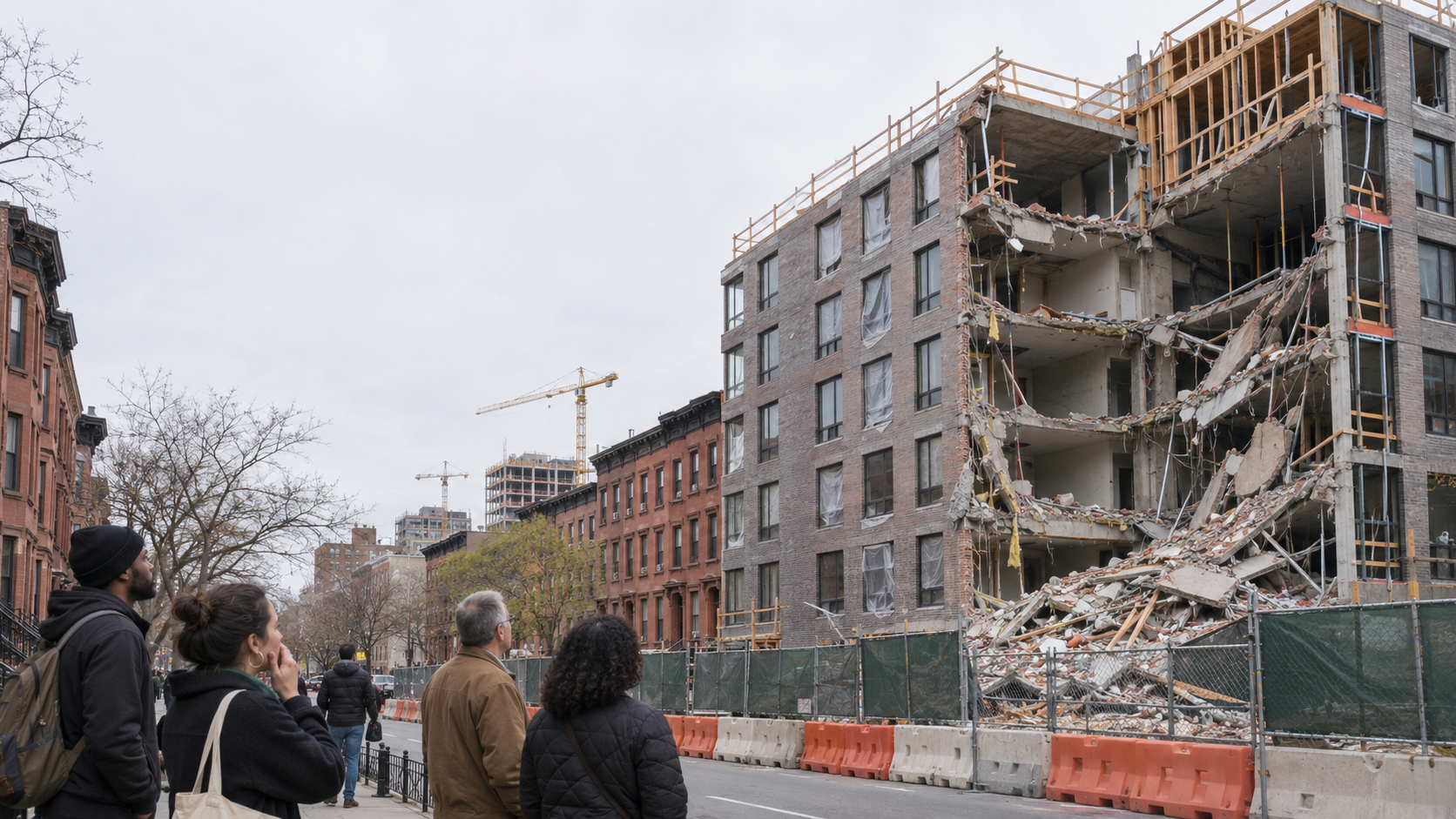
The supplied material also includes reports that are separate from the guard incident. AOL reported that Macron will make a state visit to Cambodia during the Francophonie summit, scheduled for November 2026 Source 8. Euronews reported on a new book revealing private Telegram exchanges involving Macron Source 10. News of Bahrain reported that a three-storey residential building collapsed in Brooklyn’s Flatbush neighborhood Source 9.
None of those summaries connects to the ceremony or the guard. They illustrate why search results can mix unrelated stories under a president’s name. A report should keep the guard incident separate from travel plans, book coverage, and unrelated disasters unless a source explicitly links them.
Conclusion
A French guard reportedly collapsed during a formal ceremony involving Emmanuel Macron. Several reports placed the incident at or near the Élysée Palace, and one account said Macron moved to assist. The proceedings were reportedly paused or interrupted.
The number of affected guards remains unclear. The available reporting also does not establish the cause of the collapse or the guards’ medical condition. Further details require an official statement or verified follow-up reporting. In the meantime, attribution is the safest editorial standard: name the outlet, state the count it reported, and keep the unresolved questions visible.