Michigan Democrats’ Unity Push Falters Over Stevens Event
Michigan Democrats’ Unity Push Falters as Stevens Is Asked to Skip El-Sayed Event
Michigan Democrats’ effort to project unity has come under scrutiny after Rep. Haley Stevens was reportedly asked to skip an event featuring Abdul El-Sayed. The episode has raised questions about internal coordination, candidate relationships, and the party’s ability to present a consistent message during a competitive Michigan Senate race.
The available reports establish only the basic outline. Stevens was reportedly asked not to attend an event involving El-Sayed, but they do not identify who made the request or explain why. They also do not include direct comments from Stevens, El-Sayed, or Michigan Democratic Party officials. Source 1
What Happened?
Reports describe a setback for Michigan Democrats’ unity effort after Stevens was reportedly asked to skip an event featuring El-Sayed. The wording matters: the available material says Stevens was asked not to attend, not that she was formally barred, accepted the request, or caused the event to be canceled.
The reports do not identify the person or organization behind the request. They also do not explain whether it came from campaign staff, event organizers, party officials, or another political actor.
A report summarized by WSLS characterized the development as evidence that Michigan Democrats’ attempt to present a united front was faltering. Source 1 A separate summary similarly said the party’s unity message was weakening. Source 5
Why the Event Matters
Joint political events can demonstrate cooperation among candidates, officeholders, activists, and party factions. They can also reassure donors and voters that the party is prepared to coordinate during an election.
An apparent effort to keep a prominent Democrat away can send the opposite message. It may suggest disagreements about campaign strategy, public positioning, candidate relationships, or the event’s intended audience.
The political meaning of the episode may therefore exceed the practical importance of one appearance. A scheduling decision that would normally remain private can become a public sign of division during a contested Senate campaign.
The available reports do not establish that Stevens and El-Sayed are personally hostile. They identify no policy dispute, campaign disagreement, or formal party conflict. The incident should be treated as a reported episode that raised questions, not as proof of a formal split.
What Remains Unclear
The supplied material does not provide:
- Direct comments from Stevens or El-Sayed.
- A statement from the Michigan Democratic Party.
- The identity of the person who allegedly made the request.
- The event’s location, organizers, agenda, or final outcome.
- Confirmation that Stevens accepted the request.
- Evidence of disciplinary action or a lasting factional divide.
A separate source summary dated November 1, 2026, described the same unity dispute and attributed it to couriernews.com. Source 7
Because the source material consists largely of summaries and Google News links, the underlying articles should be reviewed before publication. The central claims should remain attributed until officials or original reports provide more detail.
Stevens, El-Sayed, and the Senate Race
Haley Stevens is the Democratic figure at the center of the reported event dispute. Her participation in political events carries added significance because the episode unfolded amid tensions surrounding Michigan’s Senate race.
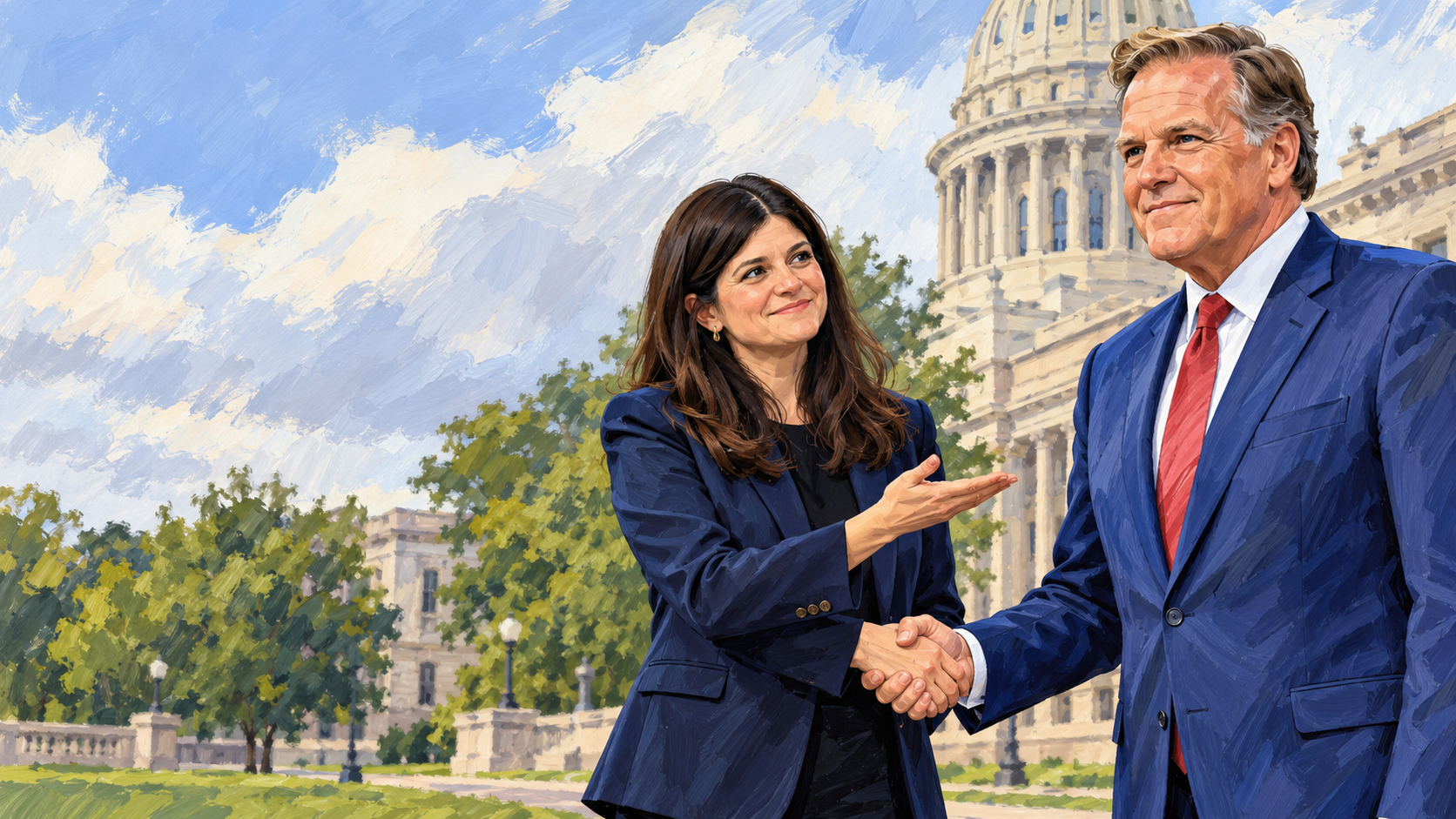
The supplied material also references a Toronto Star report saying Stevens appeared with Republican Mike Rogers during turmoil in the Senate contest. The summary identifies the publication date as November 1, 2026. Source 3
That appearance adds context to questions about Stevens’ political positioning. A bipartisan event can represent outreach to independent or Republican voters, coalition-building, or an effort to broaden a candidate’s appeal. It can also concern activists who favor a more unified Democratic message.
The available summaries do not explain Stevens’ reason for appearing with Rogers. They do not establish that the appearance caused, contributed to, or directly related to the request involving El-Sayed.
El-Sayed was the Democratic figure featured at the event Stevens was reportedly asked to skip. The supplied reports do not provide enough verified information to describe his current role, policy platform, or campaign position in detail. The evidence supports only a narrower conclusion: El-Sayed was connected to the event, Stevens was reportedly asked not to attend, and the episode was interpreted as a sign of tension within Michigan’s Democratic coalition.
Why Unity Matters
Party unity can strengthen a Senate campaign by reducing message confusion, consolidating voters, supporting fundraising and volunteer recruitment, and improving field operations and turnout efforts. It also helps candidates keep attention on campaign themes rather than internal disputes.
The reported request undermined the unity message, at least temporarily, by creating a public question about which Democrats were welcome at a party-related event. No available source shows that the incident changed voter behavior or weakened a specific campaign operation. Its immediate effect is clearer as a communications problem.
Unity requires more than public appearances. It depends on agreement about campaign priorities, communication among campaigns and party officials, transparent invitations, coordination over endorsements, and a process for resolving disagreements before they become public.
Excluding a prominent figure can intensify speculation, encourage supporters to view the move as factional control, remove an opportunity to demonstrate cooperation, and give Republicans material for criticism. Those risks remain conditional because the reporting does not explain why Stevens was reportedly asked to skip the event. The request may have resulted from logistics rather than politics.
Potential Impact on the Race
Voters may interpret the incident as evidence of unresolved conflict, routine event-management friction, or competing campaign strategies. Its effect will depend on follow-up coverage and public statements. A quick clarification could limit its significance, while continued disagreement or repeated exclusions could make it a larger campaign issue.
Activists and donors may seek evidence that Democratic candidates can cooperate and that party resources will support a coordinated strategy. The most important signals will include whether Stevens attends later Democratic events, whether El-Sayed addresses the episode, and whether party leaders issue a joint statement. A subsequent shared appearance would provide stronger evidence of cooperation than a general unity statement.
Republicans may frame the episode, Stevens’ appearance with Rogers, and any conflicting Democratic statements as evidence of division. That would be a potential campaign tactic, not a confirmed strategy. Democrats could reduce its impact through consistent messaging, direct explanations, and visible cooperation.
What to Watch Next
Future reporting should confirm or deny that Stevens was asked to skip the event and establish who organized it, who made the request, and whether the decision reflected political, logistical, or personal considerations.
Observers should also track whether Stevens and El-Sayed attend the same gatherings, share a stage, appear in campaign materials, or promote a common message. Continued cooperation would suggest that the dispute was limited. Repeated absences or conflicting statements would support the interpretation that deeper tensions remain.
Before publication, journalists should verify the candidate field, race status, primary and general-election timelines, and the context of Stevens’ appearance with Rogers. They should also confirm the event organizers’ identities and obtain an official response from Michigan Democratic leaders. The supplied summaries identify November 1, 2026, as the publication date for the Toronto Star and couriernews.com reports, but the underlying articles should be checked directly. Source 3
Conclusion
Michigan Democrats’ unity push was undermined after Haley Stevens was reportedly asked to skip an event featuring Abdul El-Sayed. The reports do not establish who made the request, why it was made, or whether Stevens agreed to stay away.
The episode nonetheless exposed the difficulty of managing differences within a major political party. Stevens’ reported appearance with Mike Rogers added to questions about Democratic coordination, although the available material does not prove that the incidents were connected.
The dispute may matter less because of the event itself than because of the message it sends. Voters, activists, donors, and candidates will look for evidence that Michigan Democrats can turn a public unity strategy into sustained cooperation. The key question is whether Stevens, El-Sayed, and party leaders can show that the reported dispute was isolated or whether it signals a broader conflict over the party’s direction in 2026.
Frequently Asked Questions
Why was Haley Stevens reportedly asked to skip the event with Abdul El-Sayed?
The available reports say Stevens was asked to skip an event featuring El-Sayed, but they do not identify who made the request or explain the reason.
Who is Abdul El-Sayed?
El-Sayed is the Democratic figure featured at the event Stevens was reportedly asked not to attend. The available summaries do not provide enough verified background to describe his current role or policy platform in detail.
What does the incident say about Michigan Democrats’ unity?
It raises questions about the party’s ability to coordinate public appearances and present a consistent message. It does not, by itself, prove a formal party split.
How does Mike Rogers fit into the controversy?
The Toronto Star summary says Stevens appeared with Republican Mike Rogers during turmoil in the Michigan Senate race. That appearance adds context to questions about Stevens’ positioning, but the supplied sources do not establish a direct link to the El-Sayed event dispute.
Is this evidence of a formal split within the Michigan Democratic Party?
No. The available reporting describes a dispute and broader tensions, but it does not provide evidence of a formal party break, disciplinary action, or confirmed factional realignment.
What should voters watch for next?
Voters should watch for statements from Stevens, El-Sayed, and Michigan Democratic leaders; future joint appearances; and clarification about the event request. Those developments will show whether the episode was isolated or part of a wider campaign conflict.
Artikel Terkait
-
 Israel Government Formation: Who Will Lead After the Election?
-
 Iran Warns of Unrestricted Response to US Attack
-
 Germany’s Gen Z Protests: Causes, Clashes, and Facts
-
 Binance Withdrawals Reportedly Set to Resume After Recovery
-
 Haley Stevens Endorses Mike Rogers in Michigan Senate Race
-
 Karen Bass Fights to Hold Los Angeles Mayorship