NASA’s Roman Telescope Could Exceed Expectations
NASA’s Roman Telescope Could Exceed Expectations
NASA’s Nancy Grace Roman Space Telescope is being built to survey the universe on a scale that neither Hubble nor the James Webb Space Telescope can match. Its wide field of view, infrared capability and precision imaging could help scientists create an unusually detailed map of distant galaxies, dark matter and planetary systems.
Recent reports suggest that Roman could produce sharper images than early expectations indicated and remain scientifically productive beyond its original planned mission. Those possibilities are significant not because Roman will replace existing observatories, but because it will combine strong image quality with an enormous survey area.
Hubble remains unmatched for many high-resolution visible and ultraviolet observations. JWST provides extraordinary sensitivity and detail at infrared wavelengths. Roman will serve a different role: It will repeatedly scan broad regions of the sky, collecting the large statistical samples needed to study dark energy, exoplanets, galaxy evolution and changing cosmic events.
Some performance claims remain projections. Roman must be launched, commissioned and tested in space before its final image quality, operating duration and survey efficiency can be measured. Its established design, however, already gives astronomers strong reasons to expect a major advance in wide-field space astronomy.
What Is the Nancy Grace Roman Space Telescope?
NASA’s Next Major Space Observatory
The Nancy Grace Roman Space Telescope is NASA’s next major astrophysics observatory. It is named for Nancy Grace Roman, NASA’s first chief astronomer and a central figure in establishing the agency’s space astronomy program. Her work helped create the scientific and institutional foundation that eventually produced missions such as Hubble. NASA
Roman is designed primarily for wide-field infrared astronomy. Instead of concentrating on one galaxy, nebula or star at a time, it will observe large sections of the sky efficiently. This approach will allow scientists to study millions of objects together and identify patterns that are difficult to see in small, isolated observations.
NASA has planned Roman as a complementary observatory. Hubble examines the universe in visible, ultraviolet and some infrared wavelengths with high spatial resolution. JWST specializes in sensitive, detailed infrared observations of faint and distant targets. Roman will survey much larger areas while retaining the image quality required for precision measurements.
The telescope is expected to launch no later than May 2027, although NASA has stated that an earlier launch may be possible. Reports referring to a specific August 30 launch date should therefore be treated as schedule reporting rather than a final, independently confirmed launch date. NASA
Roman’s Core Mission Design
Roman’s scientific performance will result from the interaction of several systems:
- A 2.4-meter primary mirror collects light.
- The Wide Field Instrument produces infrared images and spectra.
- Survey programs repeatedly scan large areas of the sky.
- Precision pointing and calibration support measurements of faint changes and subtle distortions.
Roman’s advantage is not simply magnification. It is the ability to combine useful image quality with exceptional area coverage.
A narrow-field telescope can produce a highly detailed image of one small region. A wide-field survey telescope can observe thousands or millions of stars and galaxies in a practical amount of time. Roman is designed to make the second strategy possible at an unprecedented scale for a space observatory.
That distinction matters because many astronomical questions are statistical. Scientists need large samples to measure how common a type of galaxy is, how frequently planets form, how dark matter is distributed and how the universe’s expansion changed over time.
Why Roman Could Produce Sharper Images Than Expected
Improved Optical Performance
Reports suggest that Roman may deliver sharper images than some earlier predictions indicated. Sharper images would improve nearly every major survey goal.
Astronomers could more effectively separate nearby or overlapping stars, measure galaxy shapes, detect fainter sources and identify objects hidden in crowded fields. Better images would also strengthen measurements based on gravitational lensing, in which gravity subtly changes the apparent position or shape of background objects.
“Sharper” does not mean Roman will outperform Hubble or JWST in every category. Hubble remains extremely powerful for high-resolution visible-light work, while JWST is optimized for sensitive infrared observations of individual targets. Roman’s potential advantage is the combination of:
- Strong optical performance.
- Infrared sensitivity.
- Stable observing conditions above Earth’s atmosphere.
- Advanced calibration and image processing.
- A field of view far larger than those of Hubble or JWST.
The result could be a survey that is both broad and precise.
The Importance of Image Stability
Resolution is only one part of precision astronomy. Image stability and calibration are equally important. If a telescope’s pointing changes slightly or its optical response varies across a detector, those effects can complicate measurements across a large survey.
Roman will investigate weak gravitational lensing, galaxy clustering, exoplanet microlensing and the distribution of dark matter. Each field depends on detecting small signals within large quantities of data.
For weak lensing, astronomers measure tiny distortions in distant galaxy shapes caused by foreground matter, including dark matter that cannot be observed directly. An image that is sharp, stable and accurately calibrated makes it easier to distinguish cosmic distortion from instrumental effects.
Better-than-expected image quality could therefore improve the reliability of millions of measurements. The benefit would not necessarily appear as one spectacular photograph. It would appear in cleaner catalogs, more accurate maps and stronger statistical conclusions.
The Reported “Spy Mirror”
Discover Magazine has reported that Roman will use a “spy mirror” to improve cosmic mapping. The phrase should be treated carefully. It is not presented here as an official NASA technical designation, and the exact component or function requires confirmation from formal mission documentation. Discover Magazine report
If the reported optical component supports more efficient mapping or better coordination between observing modes, it could increase Roman’s survey productivity. Possible benefits include faster coverage of broad sky regions, better identification of distant objects and more effective detection of transient events.
The central point remains clear without relying on the nickname: Roman’s optical system is designed to support precision wide-field surveys. Claims about a specific “spy mirror” should remain provisional until NASA publishes definitive technical details.
Roman’s Wide View Will Change How Astronomers Survey Space
Hubble and JWST See Deeply; Roman Sees Broadly
Hubble and JWST are often described as space-based close-up cameras. Roman will function more like a high-resolution, wide-angle survey camera.
Hubble can produce detailed images of galaxies, star-forming regions and planets. JWST can examine extremely faint and distant galaxies, analyze exoplanet atmospheres and study cold objects in infrared wavelengths. Roman will cover far larger portions of the sky in fewer observations.
That broad view does not make Roman a replacement for either telescope. Instead, Roman can identify targets for later, more detailed observations. A Roman survey might find a rare galaxy, an unusual supernova or a promising planetary system. Hubble, JWST or a ground-based observatory could then investigate that target in greater detail.
This division of labor will make the observatories more powerful as a group.
The Scientific Value of a Larger Field of View
A large field of view is essential for statistical astronomy. A survey covering more sky can create larger galaxy catalogs, detect rare events and compare different cosmic environments.
It can also reduce the risk of drawing conclusions from an unusual patch of the universe. One small field might contain an atypical concentration of galaxies or an unexpected lack of objects. A broad survey reveals whether that feature is representative or exceptional.
Roman is expected to detect and monitor transient events such as:
- Exploding stars.
- Variable stars.
- Stellar outbursts.
- Gravitational microlensing events.
- Temporary changes in distant galaxies.
Patterns that remain invisible in narrow observations can become obvious when thousands of fields are compared. Roman’s broad surveys will help astronomers study the universe as a connected population rather than as a collection of isolated targets.
A Longer Mission Could Expand Roman’s Scientific Legacy
Why Mission Longevity Matters
NASA has designed Roman for a primary mission of at least five years, with the possibility of an extended mission if the spacecraft, instruments and budget support continued operations. NASA Roman Mission Overview
Reports suggesting that Roman could operate longer than initially expected describe a possibility, not a guaranteed schedule. Mission longevity depends on spacecraft health, propellant, orbital management, radiation exposure, instrument performance, funding and future NASA decisions.
Additional operating years could substantially increase the telescope’s scientific return. Roman could cover more sky, revisit existing fields and build longer time baselines for measuring motion and change.
Longer operations would also create opportunities that cannot be scheduled in advance. Rare explosions may occur after the original survey ends. New observing techniques may emerge. Data from other missions may reveal a need for Roman follow-up.
Longer Observations Improve Time-Domain Astronomy
Time-domain astronomy studies objects and events that change. Roman’s repeated observations could allow scientists to:
- Track stars that brighten and fade.
- Measure the movement of distant objects.
- Find short-lived stellar explosions.
- Detect planetary microlensing events.
- Monitor changes in active galaxies.
Some signals are rare, weak or brief. A longer mission increases the chance of catching them and provides more observations for confirming their nature.
Extended monitoring is especially valuable for microlensing. A temporary increase in a star’s brightness may last only days or weeks, while a planet’s gravitational influence can appear as a short deviation in the overall event. More observing time means more opportunities to detect such signals.
More Time for Follow-Up and Data Analysis
Roman’s work will continue after each exposure. Large surveys often produce their full scientific value only after years of processing, comparison and interpretation.
An extended mission could support additional calibration observations, expanded survey programs and follow-up studies of unexpected discoveries. Analysis methods will also improve as scientists gain experience with the data.
Roman’s catalogs could be compared with measurements from Hubble, JWST, the Vera C. Rubin Observatory and other facilities. Those comparisons can reveal connections between galaxy structure, star formation, planetary systems and cosmic expansion.
Roman’s Role in the Search for Dark Energy
Mapping the Universe’s Expansion
Dark energy is the name scientists give to the unknown influence associated with the accelerating expansion of the universe. Roman will not identify dark energy directly. It will test competing explanations by measuring how galaxies, supernovae and matter are distributed across cosmic time.
Its planned investigations include:
- Mapping large numbers of galaxies.
- Measuring galaxy clustering.
- Observing Type Ia supernovae as distance indicators.
- Measuring weak gravitational lensing.
- Studying how cosmic structure grew.
Each method provides a different view of expansion and structure formation. Agreement among them would strengthen the standard cosmological model. Disagreement could point to incomplete physics or the need to revise current assumptions. NASA Roman Science
Weak Gravitational Lensing
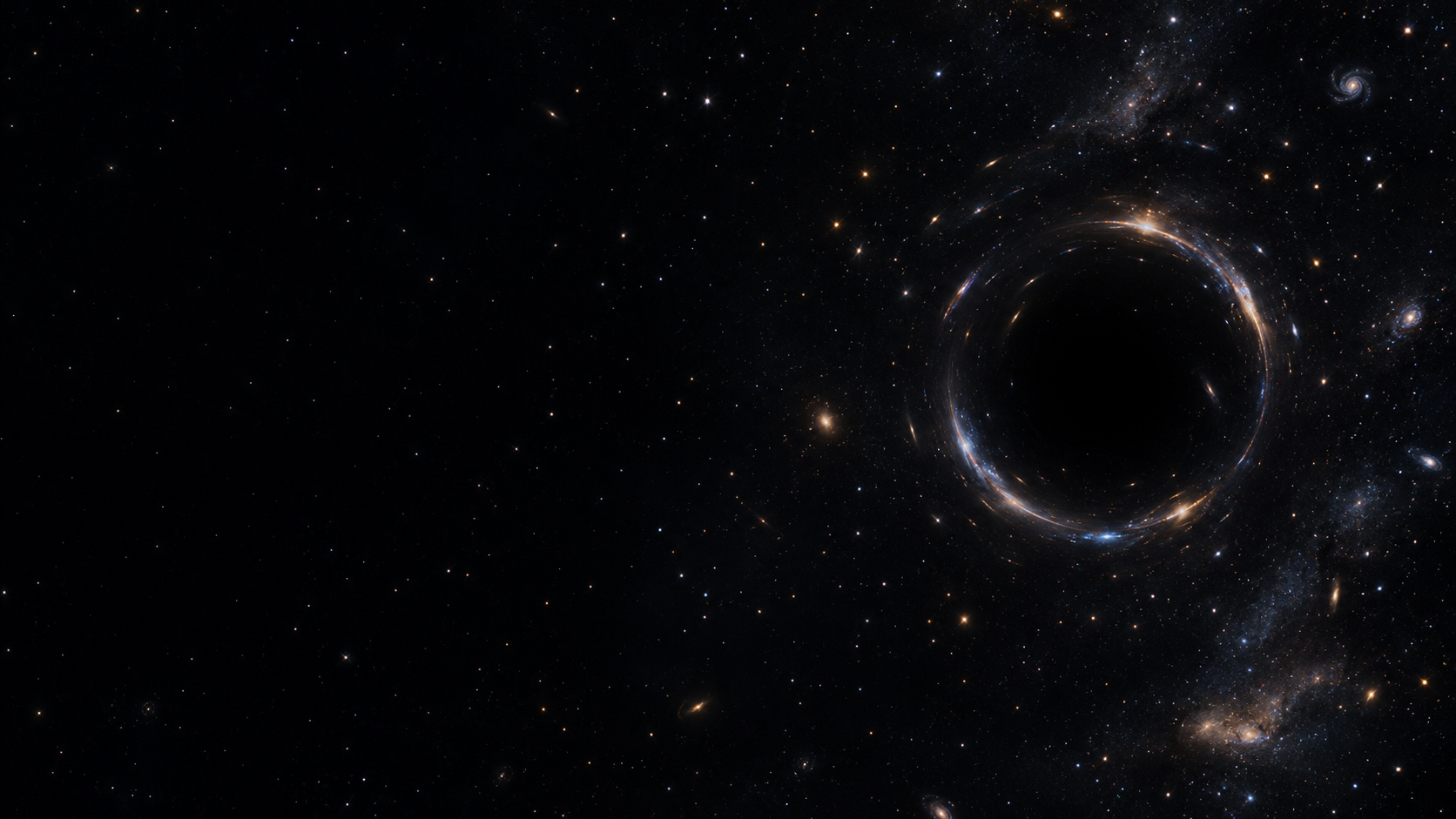
Weak gravitational lensing occurs when foreground matter subtly distorts the shapes of distant galaxies. Much of that foreground matter is dark matter, which does not emit or reflect light in the ordinary way.
Roman’s wide survey area will provide the large sample required for this measurement. Its image quality and stability will help astronomers distinguish genuine lensing signals from telescope and detector effects.
The resulting maps could help scientists trace dark matter indirectly, test models of cosmic structure, compare matter distribution with predictions and investigate the relationship between dark energy and expansion.
Roman will not solve the dark-energy problem alone. It will provide one of the most extensive bodies of evidence available for testing the universe’s history.
Roman and the Search for Exoplanets
Gravitational Microlensing
Roman will primarily find exoplanets through gravitational microlensing. When a foreground star passes near the line of sight to a more distant star, the foreground object’s gravity bends and magnifies the background star’s light.
If a planet orbits the foreground star, its gravity can produce a brief additional change in brightness. Astronomers can use that signal to infer the planet’s presence and estimate properties such as its mass and distance from its host star.
Roman is well suited to microlensing because it can monitor dense stellar fields, observe in infrared wavelengths and record many stars at once. Infrared observations are particularly useful toward the crowded center of the Milky Way, where dust and overlapping stars complicate visible-light surveys.
Planetary Systems Beyond the Solar System
Roman could help identify:
- Cold planets far from their host stars.
- Low-mass planets.
- Planetary systems near the Milky Way’s center.
- Rogue planets that do not orbit a star.
- Worlds that are difficult to find through transits or radial-velocity measurements.
Microlensing complements other planet-hunting techniques. Transit surveys favor planets that cross the faces of their stars. Radial-velocity surveys detect the gravitational motion caused by orbiting planets. Microlensing can reveal distant and cold worlds that both methods often miss.
Roman’s exoplanet survey will be especially valuable statistically. It can help estimate how common different planetary systems are, providing targets and priorities for future missions that study atmospheres and habitability.
Roman’s Contribution to Galaxy Evolution
From Early Galaxies to the Modern Universe
Roman will observe galaxies at different distances. Because light takes time to travel, more distant galaxies are seen at earlier stages in cosmic history.
Its surveys can help scientists investigate how galaxies assembled, when stars formed, how galaxies grew through mergers and how central black holes influenced their surroundings.
Infrared capability is important because the expansion of the universe stretches light from distant galaxies toward longer wavelengths. Roman will therefore be able to study populations that are difficult to characterize in visible light alone.
Large-Scale Cosmic Structures
Roman will map galaxy clusters, filaments, voids and regions shaped by dark matter. These structures form the cosmic web, the large-scale arrangement of matter across the universe.
A broad, consistent survey makes it possible to compare structures across environments and eras. Improved optics could sharpen measurements of galaxy shapes and clustering, helping scientists connect visible galaxies with the invisible dark matter framework around them.
What the “Breathtaking Possibilities” Really Mean
Roman’s potential does not depend on one dramatic image or one instrument. Its impact will come from combining:
- Wide-field infrared imaging.
- High image quality.
- Repeated observations.
- Large statistical samples.
- Coordination with other observatories.
That combination works at two scales. Roman can study individual stars, galaxies and planetary systems. It can also reveal population-level patterns across enormous regions of the universe.
Unexpected discoveries are likely to become part of the mission’s legacy. Roman could reveal unfamiliar types of transients, unusual planetary systems, surprising galaxy structures or evidence that challenges current ideas about dark matter and cosmic expansion.
Those outcomes remain possibilities, not confirmed discoveries. The history of astronomy shows, however, that powerful surveys often produce findings beyond their original objectives.
Limits, Uncertainties and Claims to Treat Carefully
Established mission goals should be separated from speculative reporting.
The following claims require confirmation through NASA documentation and post-launch testing:
- Roman will produce sharper images than early predictions.
- Roman will operate substantially longer than its primary mission.
- The exact function of the reported “spy mirror.”
- The final launch date.
- The telescope’s operational performance after commissioning.
NASA’s official mission pages should remain the primary references for technical specifications, launch status, expected mission duration and instrument capabilities. Early predictions can change after launch as engineers calibrate the observatory and scientists evaluate its real performance.
Unverified entries without URLs, dates or substantive information do not provide reliable evidence. They should not be used to support claims about Roman or its science.
Conclusion: Roman Could Expand the Astronomical Map
Roman’s greatest advantage will be its ability to combine precise imaging with an enormous survey area. If its images are sharper than expected and its operations continue beyond the primary mission, the telescope’s scientific return could exceed already ambitious plans.
It will map galaxies, probe dark energy, trace dark matter, find exoplanets through microlensing, study galaxy evolution and monitor transient events. Its surveys may also reveal phenomena no one has predicted.
Roman will not make Hubble or JWST obsolete. Hubble will continue providing detailed visible and ultraviolet observations, while JWST will remain a premier instrument for sensitive infrared studies. Roman will guide them toward targets and supply the broad context that narrow observations cannot provide efficiently.
Its most important contribution may be a change in perspective. Roman will show not only what individual cosmic objects look like, but also how those objects fit into the larger structure and history of the universe.
Frequently Asked Questions
What is the Nancy Grace Roman Space Telescope designed to do?
Roman is designed to conduct wide-field infrared surveys. Its major research areas include dark energy, dark matter, exoplanets, galaxy evolution and transient astronomical events.
Will Roman replace Hubble or JWST?
No. Roman will complement both observatories. Hubble provides detailed visible and ultraviolet observations, JWST offers highly sensitive infrared studies, and Roman surveys much larger regions of the sky efficiently.
Why are sharper images important for Roman’s mission?
Sharper images help astronomers separate nearby objects, measure galaxy shapes, detect faint sources and improve weak gravitational-lensing studies. Image quality is one part of Roman’s advantage; its wide field of view is equally important.
How will Roman help scientists study dark energy?
Roman will map galaxies, observe supernovae and measure weak gravitational lensing. Together, these observations can show how the universe expanded and how cosmic structures formed over time.
Can Roman find planets outside the Solar System?
Yes. Roman will primarily use gravitational microlensing to detect planets, including cold, distant, low-mass and potentially free-floating worlds.
How long will the Roman Space Telescope operate?
Roman has a planned primary mission of at least five years. Reports suggest it could operate longer, but the actual duration will depend on spacecraft health, propellant, instruments, funding and NASA’s future mission decisions.