Poland Strengthens Security Along Russian Border
Poland Strengthens Security Along Russian Border
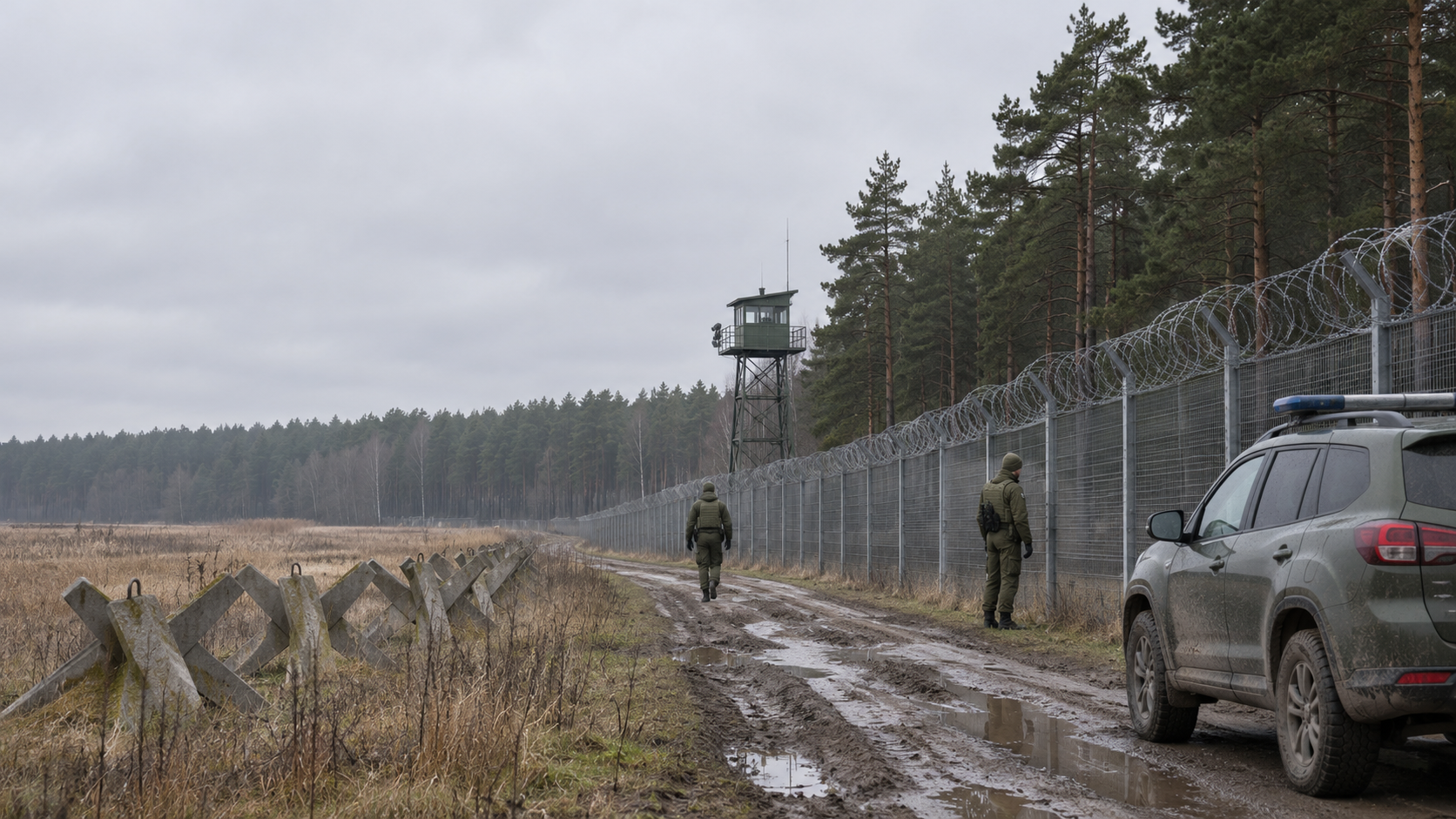
Poland is strengthening security along its border with Russia as the war in Ukraine increases pressure on NATO’s eastern flank. The reported measures reflect concerns about possible border provocations, nearby military activity, airspace incidents, and hybrid threats that may not resemble a conventional attack.
The New York Times reported that Poland was reinforcing security along its Russian border. CGTN reported that Prime Minister Donald Tusk said Polish authorities had thwarted a possible provocation in the area.Source 1 Source 3
The response extends beyond border patrols. It includes surveillance, military readiness, infrastructure protection, NATO coordination, and long-term defense modernization. Poland’s receipt of the first K2 main battle tanks under a South Korean defense agreement illustrates how border security fits into a broader effort to expand and modernize the armed forces.Source 9
Available source summaries provide limited operational detail. They do not identify the alleged provocation, specify the exact deployments, or establish that Russia directly organized the reported incident. The clearest interpretation is that Poland is preparing for sustained regional pressure while seeking to deter incidents and improve its ability to respond.
Why Poland’s Border With Russia Is a Security Priority
Poland’s Position on NATO’s Eastern Flank
Poland occupies a central position on NATO’s eastern flank. It borders Russia through the Kaliningrad region, shares a frontier with Belarus, lies close to Ukraine, and connects northern and central Europe with the Baltic states. This geography gives Poland strategic importance beyond the immediate border.
Kaliningrad is a Russian exclave between Poland and Lithuania. Its location places Russian territory close to NATO members and major transportation routes. A military incident, airspace event, or disruption in the area could affect several countries at once.
Poland also serves as a major land corridor for military equipment, humanitarian supplies, and other assistance connected to the war in Ukraine. That role increases the importance of roads, railways, logistics centers, communications networks, and border crossings.
For Warsaw, border security has two dimensions: protecting Polish territory and maintaining the resilience of the wider eastern-flank network on which NATO members and Ukraine depend.
Available reporting does not establish specific troop numbers, weapons deployments, or new permanent formations along the border. Those details require confirmation from Polish authorities, NATO statements, or independent reporting. The broader strategic point is clear: Poland’s location makes it a frontline state in Europe’s changing security environment.
The Impact of the War in Ukraine
Russia’s war against Ukraine has increased the risk that military activity could affect neighboring NATO countries. Missiles, drones, debris, electronic interference, and airspace violations can create danger even when an attack is not aimed at Poland.
Al Jazeera reported that NATO pledged additional support for Ukraine after Russian strikes occurred near Poland.Source 7
A strike near Poland is not automatically an attack on Poland. The distinction matters legally and militarily. However, proximity creates risks of miscalculation. A missile can deviate, debris can cross a border, and an unidentified drone can force authorities to determine quickly whether it represents a deliberate attack, an accident, or a technical failure.
These risks make early detection and rapid communication essential. Polish forces and border authorities must distinguish ordinary activity from a genuine threat while avoiding unnecessary escalation.
What Prompted Poland’s Latest Security Measures?
A Reported Possible Provocation
CGTN reported that Donald Tusk said Polish authorities had thwarted a possible provocation at the border with Russia.Source 3
The word “provocation” requires caution. The available summary does not identify the actors involved, the suspected method, the target, or the date. It does not establish that the incident was a confirmed Russian operation.
In security reporting, a provocation can refer to several types of activity, including an unauthorized border crossing, interference with infrastructure, a drone or airspace incident, sabotage, coordinated disinformation, or engineered migration pressure. These activities differ significantly in severity and attribution.
The term can also describe an incident designed to test a government’s response. An actor may seek to identify gaps in surveillance, measure the speed of official reactions, or create political pressure without initiating open conflict.
Because the source summary is incomplete, the specific nature of the reported event remains unclear. Readers should separate the confirmed claim—that Polish authorities said they stopped a possible provocation—from assumptions about who organized it or what happened operationally.
A Security Alert Is Not a Military Escalation
Increased patrols, surveillance, and military readiness do not automatically indicate that war is imminent. Governments often raise alert levels after ambiguous incidents to deter further activity and reduce response times.
Preventive security measures can reassure the public, protect critical sites, improve coordination between civilian and military agencies, and signal that hostile activity will be detected. They can also reduce the chance that a small incident develops into a larger crisis.
Assessing escalation requires more than a headline. Reliable analysis depends on official statements, independent reporting, evidence about the incident, and information about the duration and scale of any deployment. Without those details, it is premature to describe the latest measures as preparation for an immediate military confrontation.
How Poland Is Strengthening Border Security
Surveillance, Detection, and Rapid Response
Modern border security depends on layered monitoring. Border guards may observe crossings and local activity, while military and intelligence agencies monitor wider patterns involving drones, aircraft, electronic signals, and unusual movements.
Potential capabilities include observation posts, cameras, ground sensors, aerial surveillance, drone-detection systems, secure communications, and rapid-response units. These are common border-protection tools; available reporting does not confirm which specific systems Poland has deployed in response to the latest warning.
Layered surveillance matters because many potential threats have a low physical profile. A small drone, an individual crossing at night, or an attempt to disrupt communications may be difficult to detect through traditional patrols alone. Combining sensors, human observation, intelligence, and rapid decision-making improves the chance of identifying activity before it reaches a sensitive location.
Coordination is equally important. Border guards, police, armed forces, emergency services, local authorities, and intelligence agencies need clear procedures for sharing information. A delayed handoff between agencies can create vulnerabilities even when each organization has capable personnel.
Protecting Critical Infrastructure
Border security extends behind the physical frontier. Poland’s transport networks, energy facilities, communications systems, military bases, and logistics hubs may all have strategic importance.
Railways and roads support the movement of people, equipment, and supplies. Communications networks enable military and emergency coordination. Energy infrastructure supports civilian resilience and defense operations. Disruption at any of these points could create effects far from the border itself.
A hostile actor does not need to cross the border with conventional forces to create pressure. Cyberattacks, sabotage, misinformation, or interference with transport could slow reinforcement and increase public uncertainty.
Available sources do not identify any specific Polish facility as a target. The broader security principle remains relevant: defending the border includes protecting the systems that allow the country and its allies to function during a crisis.
Countering Hybrid Threats
Hybrid threats combine military pressure with nonmilitary tools. They can include cyberattacks, sabotage, disinformation, coercive migration tactics, espionage, economic pressure, and the use of irregular groups.
These tactics create attribution problems. A conventional attack may provide visible evidence of responsibility, while a cyber incident or infrastructure failure can initially appear accidental. An actor may also use intermediaries or ambiguous methods to avoid triggering a direct response.
The reported possible provocation highlights why intelligence sharing and coordinated public communication matter. Authorities must identify what happened, establish who was responsible, and respond without allowing uncertainty to produce panic or overreaction.
A proportionate response is difficult when activity falls below the threshold of armed attack. Governments may need to strengthen defenses, investigate quietly, issue warnings, impose legal penalties, or consult allies. Clear attribution becomes especially important before imposing major sanctions or treating an incident as an alliance-level attack.
NATO’s Role in Poland’s Security Response
Support After Strikes Near Poland
Al Jazeera reported that NATO pledged additional support for Ukraine after Russian strikes occurred near Poland.Source 7
Support for Ukraine can also support Poland’s security interests. Assistance that helps Ukraine defend its territory may reduce the ability of Russian forces to apply pressure farther west. It can also strengthen the defenses of a country positioned beside NATO territory.
NATO assistance to Ukraine is not identical to direct NATO military action against Russia. Alliance support can involve weapons, training, intelligence, logistics, air defense, and political coordination. The available summary does not specify the exact form of the reported additional support.
An incident near Polish territory can lead to consultations, heightened surveillance, and air-defense measures without automatically activating collective-defense provisions. NATO members must assess the facts and determine whether an event falls within the alliance’s established response mechanisms.
Deterrence Through Alliance Coordination
Deterrence depends on credible defensive capability and visible political unity. Joint exercises, intelligence sharing, air policing, logistics planning, and coordinated public messaging can make it harder for an adversary to exploit gaps between allies.
Poland’s national measures therefore form part of a wider alliance posture. A stronger Polish border can improve local resilience, while NATO coordination can provide additional information and reinforcement if a crisis develops.
Deterrence must remain proportional. Clear communication, disciplined military activity, and accurate public statements help demonstrate readiness without presenting defensive preparations as offensive plans.
Poland’s Broader Military Modernization
The Arrival of South Korean K2 Tanks
Poland has expanded its armored capabilities by receiving the first K2 main battle tanks under a South Korean defense agreement. The delivery also broadens military cooperation between Warsaw and Seoul.Source 9
The K2 delivery should be understood as part of a long-term modernization program, not as a direct response to one reported border incident. Modern armored vehicles can improve Poland’s ability to defend territory, reinforce threatened sectors, and contribute to NATO’s eastern-flank posture.
The agreement also reflects Poland’s effort to diversify defense relationships. Cooperation with a non-European supplier can expand procurement options and reduce dependence on a limited number of production channels.
The available source summary does not provide verified figures for the number of vehicles delivered, the full contract value, delivery timetable, or detailed industrial arrangements. Those details should not be inferred from the report.
Why Armor Matters
Armored forces remain relevant because they provide protected mobility, firepower, and the ability to conduct defensive maneuver. Tanks can support infantry, hold key corridors, counter armored threats, and reinforce sectors under pressure.
They cannot secure a border by themselves. Effective armored operations require trained crews, maintenance, fuel, ammunition, recovery vehicles, communications, intelligence, drones, engineers, and air-defense protection.
The arrival of K2 tanks therefore represents more than an equipment purchase. It signals an effort to build a larger and more capable military that can respond to scenarios ranging from deterrence and reinforcement to territorial defense.
What the Developments Mean for Poland and Europe
Poland may be preparing for persistent pressure rather than a short-lived alert. The war in Ukraine, Russian military activity, possible border provocations, cyber threats, and information operations have changed the country’s security environment.
A permanent readiness posture carries costs. It requires personnel, equipment, training, infrastructure, intelligence, and political attention. Border communities may also face stricter controls and greater military activity.
The central issue is sustainability. Temporary reinforcement can address an immediate concern, but long-term security requires stable funding, trained personnel, reliable equipment, and clear responsibilities among civilian and military institutions.
The same environment that makes stronger defenses necessary also creates risks. Unclear attribution can lead governments to blame the wrong actor. Airspace incidents can produce urgent decisions with incomplete information. Military exercises near borders can be misread as preparation for attack.
Transparent evidence and reliable communication channels reduce these dangers. Stronger defenses can lower vulnerability, but they should be accompanied by careful signaling and disciplined decision-making.
Readers should distinguish defensive readiness from evidence of planned military action. Poland’s security measures demonstrate concern and preparation. They do not, by themselves, prove that Warsaw expects an imminent war with Russia.
Key Takeaways
- Poland is strengthening security along its border with Russia amid rising regional tensions.
- Donald Tusk reportedly said authorities had stopped a possible provocation, but available reporting does not identify the actors, method, or target.Source 3
- NATO reportedly pledged additional support for Ukraine after Russian strikes occurred near Poland.Source 7
- The delivery of K2 tanks shows that border security is linked to wider military modernization.Source 9
- Poland’s immediate objectives are deterrence, early detection, infrastructure protection, and rapid response—not necessarily preparation for imminent war.
Frequently Asked Questions
Why is Poland strengthening security along its border with Russia?
Poland is responding to heightened regional risks linked to the war in Ukraine, Russian military activity, possible provocations, and hybrid threats near its territory. Its position on NATO’s eastern flank makes border incidents strategically important.
What possible provocation did Poland reportedly thwart?
The available CGTN summary says Donald Tusk reported that authorities had thwarted a possible provocation. It does not identify the suspected actors, method, target, or date. Further details require independent confirmation.Source 3
Does increased border security mean war with Russia is imminent?
No. Reinforced surveillance, patrols, and military readiness are defensive measures intended to deter incidents and improve response times. They do not independently prove that an attack is imminent.
How has NATO responded to threats near Poland?
Al Jazeera reported that NATO pledged additional support for Ukraine after Russian strikes occurred near Poland. The available summary does not specify the exact form or scale of that support.Source 7
What role do K2 tanks play in Poland’s defense strategy?
K2 tanks strengthen Poland’s armored forces and support defensive operations, deterrence, and reinforcement of NATO’s eastern flank. Their effectiveness depends on trained crews, logistics, maintenance, ammunition, intelligence, drones, and air-defense support.Source 9
Is Poland’s response focused only on the physical border?
No. Modern border security also includes surveillance, cyber defense, infrastructure protection, counter-disinformation measures, intelligence sharing, and coordination between civilian and military agencies.
Artikel Terkait
-
 Poland Reports Foiled Provocation Near Kaliningrad
-
 UK Settlement Rules: Proposed 10-Year Route Explained
-
 Miliband Backs Slavery Apology, Rejects Reparations
-
 Spain Rail Safety Crisis: Minister Resigns After Crashes
-
 2026 House Election Results: Claims Require Verification
-
 Michigan Senate Race: El-Sayed and Rogers Tighten Contest