Why Voters Are Rejecting AI Data Centers
Why Voters Are Rejecting AI Data Centers
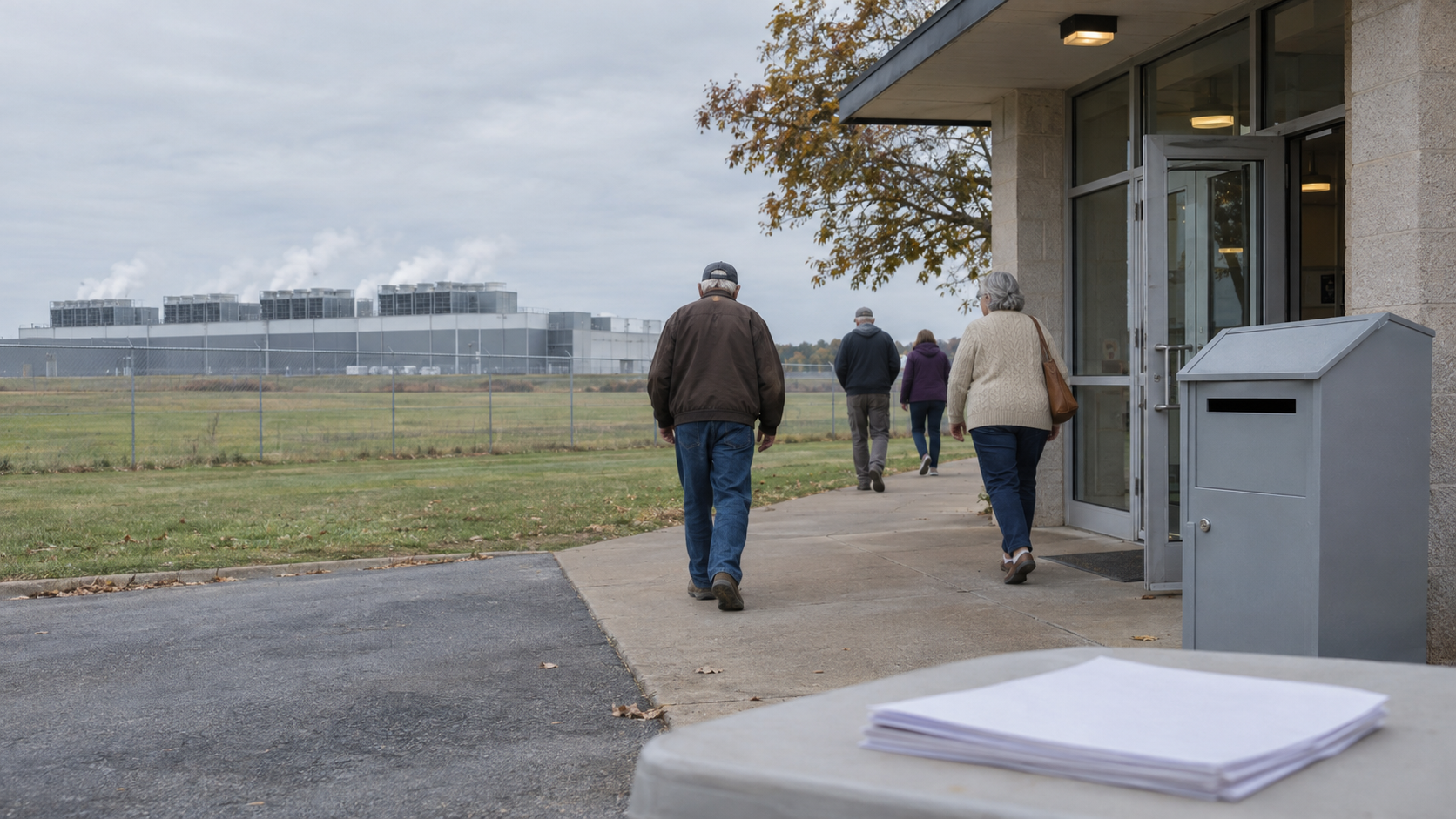
American voters rejected dozens of proposed data-center developments in local ballot measures, creating a significant political setback for companies seeking to expand artificial intelligence infrastructure rapidly. Reports cited between 45 and nearly 50 measures involving proposed data centers during the midterm elections, with opposition emerging across multiple communities rather than in one isolated region. Source 1 Source 7.
The results do not show that every American opposes data centers or artificial intelligence. They show that many voters are unwilling to approve specific facilities without clearer evidence about electricity use, water consumption, land requirements, infrastructure costs, and community benefits.
That distinction matters. AI companies need large data centers to train models, deliver services, and handle growing demand. These facilities require substantial physical infrastructure, including electricity generation, transmission capacity, cooling systems, industrial land, backup power, and network connections. Local approval has therefore become a major constraint on national AI expansion plans.
The central political question is no longer whether AI companies want to build more computing capacity. They do. The question is whether communities will accept the local costs and risks associated with that expansion.
What Happened in the Data-Center Ballot Measures?
Voters Rejected Dozens of Proposed Projects
Data-center proposals appeared on ballots in communities considering whether to permit or block large developments. Tom’s Hardware identified 45 measures involving AI data-center projects, while another report described nearly 50 rejected proposals during the midterm elections. Source 9 Source 7.
KCRA reported that voters overwhelmingly rejected proposed data centers in their communities, while Stateline described opposition across the country. Source 1 Source 3.
These were community-level decisions, not a single nationwide referendum. The available source summaries do not provide a complete national vote tally or a standardized count of all facilities involved. The reported range should therefore be read as an account of ballot measures, not as a definitive measure of every American’s view of AI infrastructure.
Even with that limitation, the number of local defeats is politically important. It suggests that resistance is emerging in multiple jurisdictions and that community campaigns can challenge projects backed by well-funded technology companies, developers, utilities, and local officials.
The Vote Was About Local Development, Not Only AI
Most voters were not deciding whether artificial intelligence should exist. They were deciding whether a particular facility should be built in a particular place.
The decision can involve several practical concerns:
- Electricity demand and grid reliability.
- Potential effects on utility rates.
- Water consumption and cooling systems.
- Land conversion and zoning.
- Equipment and generator noise.
- Construction traffic and disruption.
- Tax incentives and public subsidies.
- New substations, roads, and transmission lines.
- Long-term environmental obligations.
This helps explain why people can support AI applications while opposing an AI data center near their homes or businesses. A voter may value medical research, productivity tools, or online services while questioning whether a proposed facility provides enough local benefit to justify its physical footprint.
Local elections focus on immediate and visible effects. National technology goals may promise innovation and economic growth, but residents often ask more direct questions: Who pays for power upgrades? How much water will the facility use? How many permanent jobs will it create? What happens if the company leaves?
Why Communities Are Resisting AI Data Centers
Electricity Demand and Grid Pressure
Electricity is among the most politically sensitive issues in data-center development. Large facilities can operate continuously and create new demand in areas that already face limited generation or transmission capacity.
Residents may worry that new demand will require power plants, substations, or transmission lines. They may also question whether the data-center operator will pay the full cost of those upgrades or whether utilities will recover part of the expense through higher rates.
The debate becomes sharper during periods of grid stress. If electricity supply is limited, residents may ask whether a private technology project should receive priority over households, hospitals, schools, agriculture, or existing businesses.
Developers often present new demand as an economic opportunity. Utilities may gain a major customer, and local governments may receive tax revenue. Voters may still reject the project if they believe infrastructure costs are uncertain or financial benefits are overstated.
Water Use and Environmental Concerns
Some data centers use water for cooling, although consumption varies significantly by facility design, climate, cooling technology, and operating practices. Not every data center has the same water profile.
Communities may nevertheless raise concerns about:
- Pressure on municipal water supplies.
- Competition with agriculture or residential users.
- Water withdrawals during droughts.
- Limited public information about expected consumption.
- Wastewater and treatment requirements.
- Effects on rivers, aquifers, or reservoirs.
A credible assessment must examine the specific design rather than assume identical impacts across all facilities. An air-cooled center, a facility using closed-loop systems, and a project relying on evaporative cooling may have materially different water requirements.
Public confidence declines when companies provide broad estimates without explaining peak use, seasonal variation, emergency conditions, or drought procedures. Residents increasingly expect water projections and monitoring results to be public.
Land Use, Noise, and Quality of Life
Large data centers can transform local landscapes. A project may include industrial buildings, substations, backup generators, cooling equipment, security systems, access roads, and utility corridors.
Construction can bring heavy traffic, dust, noise, and road damage. After completion, mechanical systems and generator testing may create persistent noise. Residents in rural areas may object to converting open land into industrial infrastructure, particularly when the facility produces relatively few permanent jobs.
The physical scale of a project also influences public opinion. A data center may occupy a large site while requiring a smaller operational workforce than a manufacturing plant, warehouse complex, or research campus. That comparison can weaken claims about job creation.
Transparency and Public Trust
Community resistance often reflects distrust of the approval process. Opposition may intensify when residents believe major decisions were negotiated before the public received complete information.
Common transparency concerns include:
- Closed-door negotiations.
- Confidential development agreements.
- Tax abatements.
- Utility-pricing arrangements.
- Unclear infrastructure costs.
- Incomplete environmental reviews.
- Limited water and energy estimates.
- Ambiguous decommissioning responsibilities.
A company can meet formal legal requirements and still lose public support if residents feel excluded. Public hearings held after site selection, land purchases, and preliminary agreements may appear symbolic rather than meaningful.
Trust requires timely disclosure, accessible technical information, and enforceable commitments. Public-relations campaigns cannot replace binding limits on noise, water use, emissions, or ratepayer exposure.
The Economic Case for Data Centers
Promised Jobs and Tax Revenue
Supporters commonly point to several potential benefits:
- Construction employment.
- Permanent technical and maintenance positions.
- Property-tax revenue.
- Local business activity.
- Road and utility investment.
- Broadband improvements.
- Increased demand for contractors and services.
These benefits can be significant, but they vary by project. Construction jobs may last only during the building phase. Permanent employment may be modest relative to the facility’s size. Tax revenue may be reduced by abatements or special agreements.
A serious economic analysis should compare temporary and permanent jobs, expected wages, local hiring, infrastructure expenses, tax incentives, and the net revenue available to public services.
Why Economic Promises May Not Persuade Voters
Economic arguments fail when residents believe benefits are speculative while costs are immediate and permanent.
A project may not match local workforce needs. Specialized positions may require workers from outside the area. Tax incentives may reduce the revenue officials highlight. Grid upgrades may impose costs on ratepayers. Environmental effects may be difficult to reverse once land and water systems have been committed.
Voters are more likely to trust measurable commitments, such as:
- Guaranteed tax payments.
- Local hiring targets.
- Training programs.
- Energy-cost protections.
- Water-use limits.
- Noise standards.
- Independent monitoring.
- Decommissioning funds.
- Penalties for missed commitments.
The debate is not simply about whether data centers create value. It is about how much value remains in the community after public costs and long-term risks are counted.
The Distribution of Costs and Benefits
Data-center projects distribute benefits and costs among different groups. AI companies gain computing capacity. Utilities gain a large customer. Local governments may receive tax revenue. Contractors gain construction work. Residents may face changes to water systems, roads, landscapes, and electricity markets.
Ratepayers may also face higher costs if grid improvements are socialized. That possibility can turn a national technology project into a household financial issue.
Ballot campaigns often succeed when they make this distribution visible. Voters may support investment in principle but reject arrangements in which private companies receive the primary benefit while residents absorb uncertain costs.
What the Election Results Mean for AI Companies
Faster Expansion Is Becoming Politically Difficult
AI companies cannot treat data-center construction as only a technical or financial problem. Successful development also requires zoning approval, environmental review, utility agreements, community support, and political-risk management.
Repeated local defeats may lengthen project timelines and increase development costs. Companies may need to spend more on site analysis, legal work, public engagement, engineering, infrastructure, and community benefits before construction begins.
The result is a slower and more selective expansion strategy. Companies may prioritize sites with available electricity, reliable water supplies, compatible zoning, existing industrial infrastructure, and a history of supporting large projects.
Companies May Need Stronger Community Engagement
Engagement should begin before a site becomes effectively final. Companies can build trust by publishing:
- Projected electricity demand.
- Peak and average water consumption.
- Cooling-system specifications.
- Expected permanent employment.
- Construction timelines.
- Tax incentives and public costs.
- Grid-upgrade responsibilities.
- Noise and generator-testing plans.
They can also offer enforceable community benefits, local training, complaint procedures, independent monitoring, and regular public reporting.
These measures do not guarantee approval. They make the decision more credible by giving residents evidence rather than broad promises.
Greater Pressure to Improve Data-Center Efficiency
Political opposition can encourage technical innovation. Companies may invest in:
- More efficient chips and servers.
- Advanced cooling systems.
- Renewable-energy procurement.
- On-site generation and storage.
- Flexible computing workloads.
- Waste-heat recovery.
- Facilities near available power and water.
- Software that reduces unnecessary computing demand.
Efficiency can reduce local impacts, but it does not eliminate the need for review. A more efficient facility may still be large, noisy, water-intensive, or dependent on new transmission infrastructure.
What the Results Mean for Policymakers
Establish Clear Rules Before Projects Arrive
Communities need predictable rules for data-center siting. Policies may address:
- Zoning and land-use compatibility.
- Environmental impact assessments.
- Energy and water disclosures.
- Noise limits.
- Generator testing.
- Construction traffic.
- Emergency response.
- Decommissioning.
- Public reporting.
Clear standards can reduce conflict by preventing every project from becoming a one-time negotiation. They also help companies understand requirements before spending heavily on a site.
Protect Ratepayers and Public Resources
Policymakers should require developers to fund grid upgrades directly linked to their projects. Electricity-pricing agreements should be transparent, and regulators should assess whether residential customers could absorb costs.
Water safeguards may include withdrawal limits, drought-contingency plans, public usage reporting, and protections for essential community needs. Monitoring should continue after approval rather than end when construction is complete.
Balance National Technology Goals With Local Authority
Federal and state leaders may want rapid AI infrastructure growth, but local governments and voters retain important authority over land use and community impacts.
Possible approaches include regional planning, statewide siting standards, federal infrastructure support, incentives for lower-impact facilities, and local approval requirements. National AI goals should not automatically override local concerns. A project that lacks community legitimacy may face delays, litigation, or rejection regardless of its strategic importance.
Are Voters Rejecting AI or Poorly Planned Development?
The Difference Between Technology Support and Project Opposition
Ballot results should not be interpreted as a definitive national referendum on artificial intelligence. The measures addressed specific facilities, locations, designs, and approval processes.
People can support AI tools for health care, education, research, or productivity while opposing a data center because of its size, electricity use, water demand, or proximity to homes.
This distinction is essential. The reported defeats demonstrate community resistance to certain forms of AI infrastructure expansion, not conclusive evidence that Americans reject AI technology as a whole.
The Importance of Project-Specific Evidence
Public opinion can differ sharply by location. Important factors include:
- Existing grid capacity.
- Local water availability.
- Workforce conditions.
- Facility size.
- Cooling technology.
- Company reputation.
- Tax arrangements.
- Local political culture.
- Previous industrial development.
Voters need comparable metrics rather than general claims. A transparent review should show expected energy use, water consumption, employment, tax revenue, infrastructure costs, environmental effects, and enforceable protections.
Conclusion: The Next Phase of AI Expansion Will Require Public Consent
The reported defeat of dozens of data-center ballot measures exposes a major obstacle to AI growth: community acceptance. Reports cited approximately 45 to nearly 50 rejected or opposed proposals, although the available summaries do not provide a single independently verified national vote total. Source 3 Source 9.
The core concerns are consistent: electricity demand, water use, land conversion, noise, infrastructure costs, environmental risk, and transparency.
AI companies still have powerful incentives to build. However, rapid infrastructure expansion will face greater scrutiny. Future projects will depend on better siting, stronger disclosure, reliable economic analysis, and enforceable community agreements.
The central lesson is straightforward: communities may accept AI data centers when companies demonstrate measurable local benefits and protect residents from hidden costs. Without that evidence, even projects associated with one of the world’s fastest-growing technologies can lose at the ballot box.
FAQ
How many data-center proposals did voters reject?
Available reports cite approximately 45 to nearly 50 ballot measures involving proposed AI or other data-center developments. The available source summaries do not provide one independently verified national vote total.
Why are voters opposing AI data centers?
Reported concerns include electricity demand, possible effects on utility rates, water consumption, land use, noise, environmental impacts, construction disruption, and limited transparency about tax incentives and infrastructure costs.
Does opposition to data centers mean voters oppose artificial intelligence?
Not necessarily. The ballot measures concerned specific facilities and local development impacts. Voters may support AI products while opposing a particular data center because of its size, location, energy use, water demand, or approval process.
What benefits do data centers provide to local communities?
Potential benefits include construction jobs, permanent technical positions, tax revenue, infrastructure investment, broadband improvements, and increased business activity. The value depends on employment levels, tax arrangements, public costs, and enforceable commitments.
How can data-center companies gain community support?
Companies can publish detailed energy and water projections, disclose tax agreements, fund required infrastructure, offer enforceable local benefits, establish noise controls, hire locally, and involve residents before finalizing development plans.
Will these ballot defeats stop AI data-center expansion?
They are unlikely to stop expansion nationwide. They may delay projects, increase development costs, encourage stronger community agreements, and push companies toward locations with available power, water, land, and community support.